
Saturday, September 5, 2026

Nvidia, Broadcom, and OpenAI Move to Own AI's Silicon Stack

A wave of simultaneous moves is consolidating AI chip supply chains under hyperscaler and chip designer control. Nvidia acquired Groq and is shipping its own Vera CPUs. Broadcom is co-developing custom silicon with both Alphabet and OpenAI. The shift signals commoditization pressure on general-purpose GPU sales within 18-24 months.

LM Salvado

May 25, 2026

Nvidia, Broadcom, and OpenAI Move to Own AI's Silicon Stack
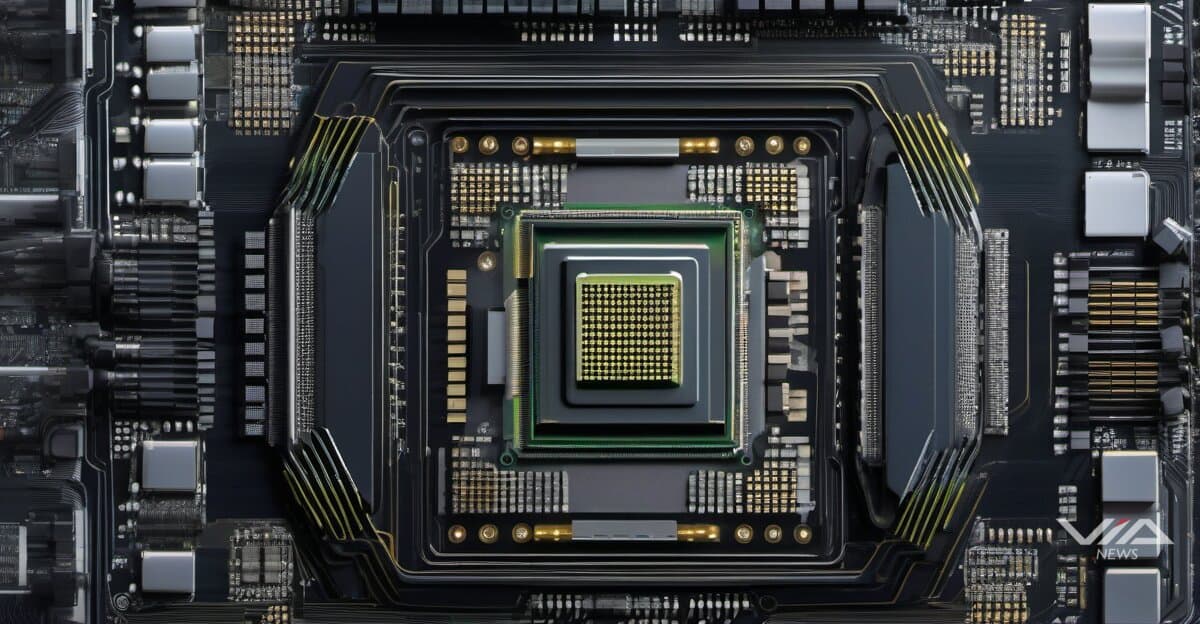
Image generated by AI for illustrative purposes. Not actual footage or photography from the reported events.
Loading stream...

Nvidia acquired Groq, the startup behind LPU inference chips, while simultaneously shipping its own Vera CPUs.1 The moves mark a pivot: Nvidia is no longer just selling GPUs — it is building a vertically integrated compute stack.

Broadcom is working on custom AI processors with both Alphabet and OpenAI.1 Arm is also part of the OpenAI collaboration. Three of the most powerful AI labs and cloud operators are now co-designing the silicon that runs their models.

Alphabet's TPU program, co-developed with Broadcom, has been running for years. The current wave differs in scale and simultaneity: multiple hyperscalers are locking in custom silicon relationships at the same time.

Tiger Global has increased stakes in Nvidia, Broadcom, and TSMC concurrently.1 The investment pattern signals confidence that custom silicon — not commodity GPU purchasing — is where AI infrastructure value accrues.

The strategic logic is straightforward. Custom chips tuned to specific model architectures deliver better performance-per-watt than general-purpose GPUs. For hyperscalers running billions of inference queries daily, that efficiency gap translates directly to cost.

Vertical integration also reduces supply chain exposure. Companies that design their own chips and manufacture through dedicated TSMC capacity are less vulnerable to GPU allocation constraints — a recurring problem during AI's rapid scaling phase.

The consolidation creates a two-tier compute market. At the top: hyperscalers with proprietary silicon and manufacturing relationships. Below: companies still dependent on commodity GPU purchasing from Nvidia or AMD.

General-purpose GPU revenue faces commoditization pressure as custom silicon deployments scale. The 18-24 month window before this pressure becomes acute gives Nvidia limited time to complete its own vertical integration before its core GPU business faces structural headwinds.1

The race to own AI's silicon stack is no longer a future scenario. It is the current state of competition.

In this story

About this analysis

This is a Via News analysis. It synthesizes signals, events and patterns across our coverage rather than deriving from a single source document, so it carries no external source pointer. Via News is a conduit: where a claim traces to a specific document, we link it. How we source

LM Salvado

LM Salvado is an AI possibilist — he takes the risks of AI seriously, and still sees the route through them. Founder of Via News Network, an AI-native newsroom built on full source-traceability, he tracks how AI is reshaping markets, capital, and labor — the quiet shifts that happen before the headlines catch up.

What we know · the intelligence behind this page
Live from the substrate
What we're seeing
AI Capital Surge Meets Investor Caution: Record Funding Rounds and Government Contracts Amid Valuation Skepticism
A single-week cluster of large AI/fintech funding rounds (Socure, Stability AI, Emerald AI, Generalist AI, Instinct, Gatik, Regent Craft) shows venture capital still pouring into AI infrastructure, identity, and autonomy plays, while Palantir's Army TITAN contract win coincided with a 6% stock drop — signaling that even flagship AI-defense revenue isn't immune to market reassessment of AI valuations. Efficiency-focused innovations like Multiverse Computing's model compression suggest the sector is also pivoting toward cost/inference economics as capital intensity draws scrutiny.
Our read on the data ›
Signals we're tracking
EPKINLY Regulatory-Clinical Success Cascade
High probability of expanded label indications, additional combination approvals, and competitive positioning strength in follicular lymphoma market. Predicts positive commercial uptake and potential accelerated review for related indications.
Patterns we're watching ›
Where sources disagree
Morgan Stanley & Co. LLC
The same metric (eps) for the same entity (Morgan Stanley & Co. LLC) reported for the identical fiscal period (Q1 2026) and observation date (2026-03-31) has two conflicting values: 3.43 USD_per_share vs 3.08 USD. This is not a temporal change — both observations claim to measure the same point in time. The ~10% discrepancy (0.35 USD difference) is material for a financial metric.
We flag conflicts openly ›
Recently verified
Checked against the original source
4,981
facts traced to their source — and we flag the ones that don't hold up.
101 entities tracked4,981 facts checked against source5,273 source documents archived
Query this data → isubstrate.com