
Saturday, September 5, 2026

ICE Plans GPU Compute Futures, Turning AI Hardware Into a Tradeable Financial Asset

Intercontinental Exchange has announced a planned GPU Compute Futures product, moving AI infrastructure from a procurement challenge into a regulated financial instrument. The product aims to create price discovery for GPU compute — a resource that underpins nearly all commercial AI development. If adopted, it could open AI infrastructure investment to a broader class of institutional investors.

LM Salvado

May 29, 2026

ICE Plans GPU Compute Futures, Turning AI Hardware Into a Tradeable Financial Asset
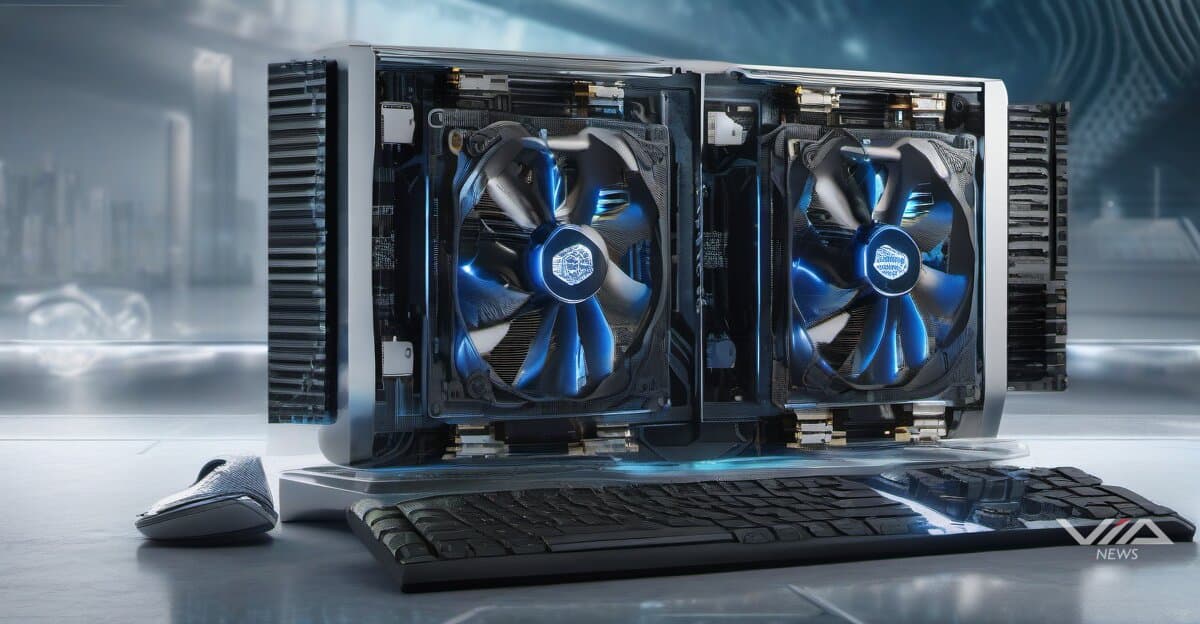
Image generated by AI for illustrative purposes. Not actual footage or photography from the reported events.
Loading stream...

Intercontinental Exchange has announced plans to launch a GPU Compute Futures product, a move that would make AI processing power a tradeable commodity for the first time.1

GPU compute is the scarce input behind every large language model, image generator, and AI inference pipeline. Until now, access has been negotiated through private cloud contracts or spot markets with limited price transparency. Futures contracts would change that.

A futures market creates a public, standardized benchmark price. Buyers — AI companies, cloud providers, research labs — could lock in compute costs months ahead. Sellers — data center operators, chip manufacturers, cloud platforms — could hedge capacity risk. Both sides gain planning certainty they currently lack.

ICE shares fell 13.32% over the past year but rose 52.17% over three years.1 The long-term trajectory reflects market confidence in ICE's expansion into non-traditional asset classes. GPU Compute Futures fits that pattern: ICE has identified AI hardware infrastructure and AI-driven financial technology as core focus areas.1

The institutionalization of compute as a commodity has direct implications for AI accessibility. Smaller AI developers currently face volatile GPU pricing, with spot costs spiking during periods of high demand. A futures market would give them tools to manage that exposure — the same tools energy-intensive industries use to manage electricity or fuel costs.

Price discovery is the immediate near-term benefit. GPU spot markets today operate with limited transparency. Futures trading would aggregate buy and sell signals into a continuous public price, giving the entire industry a shared reference point for what compute is actually worth.

Institutional investors would also gain a new entry point. Currently, investing in AI infrastructure means buying equity in Nvidia, cloud providers, or data center REITs. A compute futures market creates a direct exposure to AI infrastructure utilization — separate from any single company's stock performance.

Whether the product launches on schedule and attracts sufficient liquidity remains to be seen. Open interest and trading volumes in the first six months will determine whether futures pricing meaningfully influences GPU spot markets or remains a niche instrument.

The announcement positions ICE at the intersection of two trends: the financialization of physical infrastructure and the industrialization of AI compute.

In this story

About this analysis

This is a Via News analysis. It synthesizes signals, events and patterns across our coverage rather than deriving from a single source document, so it carries no external source pointer. Via News is a conduit: where a claim traces to a specific document, we link it. How we source

LM Salvado

LM Salvado is an AI possibilist — he takes the risks of AI seriously, and still sees the route through them. Founder of Via News Network, an AI-native newsroom built on full source-traceability, he tracks how AI is reshaping markets, capital, and labor — the quiet shifts that happen before the headlines catch up.

What we know · the intelligence behind this page
Live from the substrate
What we're seeing
AI Capital Surge Meets Investor Caution: Record Funding Rounds and Government Contracts Amid Valuation Skepticism
A single-week cluster of large AI/fintech funding rounds (Socure, Stability AI, Emerald AI, Generalist AI, Instinct, Gatik, Regent Craft) shows venture capital still pouring into AI infrastructure, identity, and autonomy plays, while Palantir's Army TITAN contract win coincided with a 6% stock drop — signaling that even flagship AI-defense revenue isn't immune to market reassessment of AI valuations. Efficiency-focused innovations like Multiverse Computing's model compression suggest the sector is also pivoting toward cost/inference economics as capital intensity draws scrutiny.
Our read on the data ›
Signals we're tracking
EPKINLY Regulatory-Clinical Success Cascade
High probability of expanded label indications, additional combination approvals, and competitive positioning strength in follicular lymphoma market. Predicts positive commercial uptake and potential accelerated review for related indications.
Patterns we're watching ›
Where sources disagree
Morgan Stanley & Co. LLC
The same metric (eps) for the same entity (Morgan Stanley & Co. LLC) reported for the identical fiscal period (Q1 2026) and observation date (2026-03-31) has two conflicting values: 3.43 USD_per_share vs 3.08 USD. This is not a temporal change — both observations claim to measure the same point in time. The ~10% discrepancy (0.35 USD difference) is material for a financial metric.
We flag conflicts openly ›
Recently verified
Checked against the original source
4,981
facts traced to their source — and we flag the ones that don't hold up.
101 entities tracked4,981 facts checked against source5,273 source documents archived
Query this data → isubstrate.com