
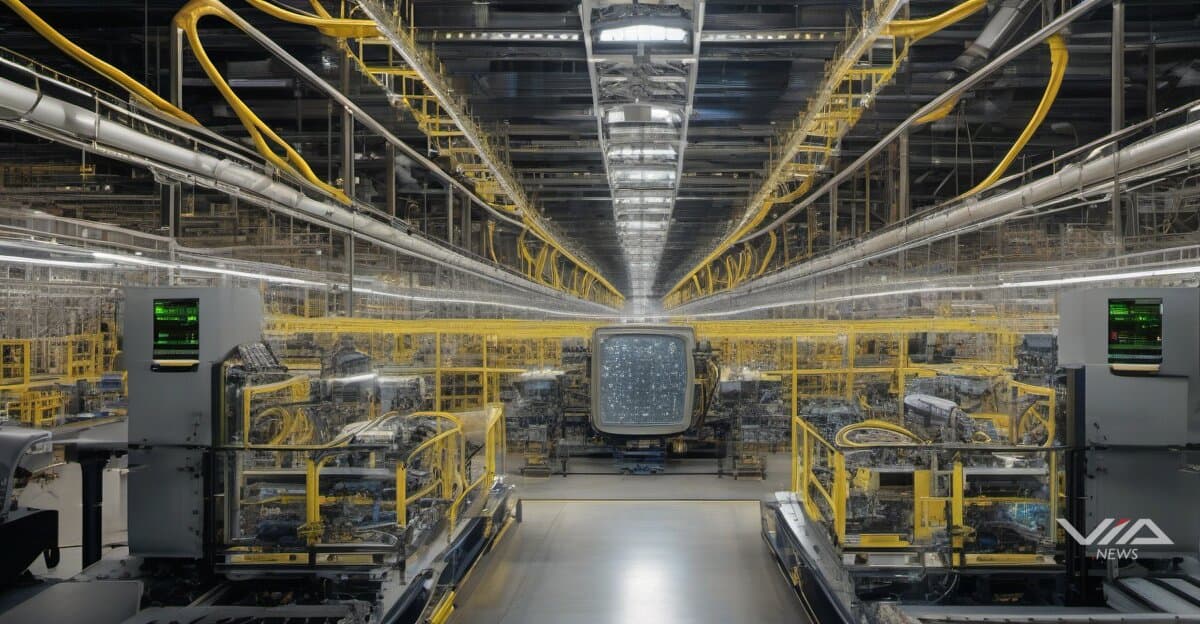
Intel joined a major semiconductor fabrication partnership focused on AI infrastructure capacity1, part of an industry-wide race to build production capabilities for AI training and deployment chips. The collaboration reflects growing demand for specialized silicon as AI models require increasingly powerful hardware.
ARM is positioning for significant growth in the AI chip market, targeting substantial revenue from processor designs2. The company's architecture powers many mobile and edge AI applications, making it central to the physical AI infrastructure buildout. Meanwhile, component manufacturers are securing positions in the AI supply chain—Camtek landed orders for AI chip packaging equipment, while LG Innotek partnered with Applied Intuition to develop autonomous driving sensor modules expected to generate orders from global automakers3.
Silicon Motion serves most NAND flash vendors, storage device makers and leading OEMs4, positioning it to benefit from AI systems requiring massive data storage capacity. Navitas Semiconductor is also active in the sector, though specific AI infrastructure initiatives were not detailed5.
Financial pressures are mounting despite growth opportunities. Wolfspeed executed a strategic refinancing expected to lower annual interest expense by approximately $62 million6, reducing debt by $97M as the capital-intensive semiconductor industry balances expansion with financial sustainability.
Geopolitical complexity adds uncertainty to the buildout. Chinese restrictions on rare earth mineral exports—critical for semiconductor manufacturing—introduce supply chain risks that could delay or increase costs for new fabrication facilities. The tension between infrastructure expansion needs and supply chain nationalism creates planning challenges for companies investing billions in new capacity.
The semiconductor industry faces a critical window: AI model scaling drives unprecedented demand for specialized chips, but capitalizing requires massive capital investment during a period of financial constraint and geopolitical supply chain fragmentation. Companies that successfully navigate the financing, supply chain, and technical challenges will capture the AI infrastructure market, while those that stumble risk obsolescence as the industry consolidates around winners.