
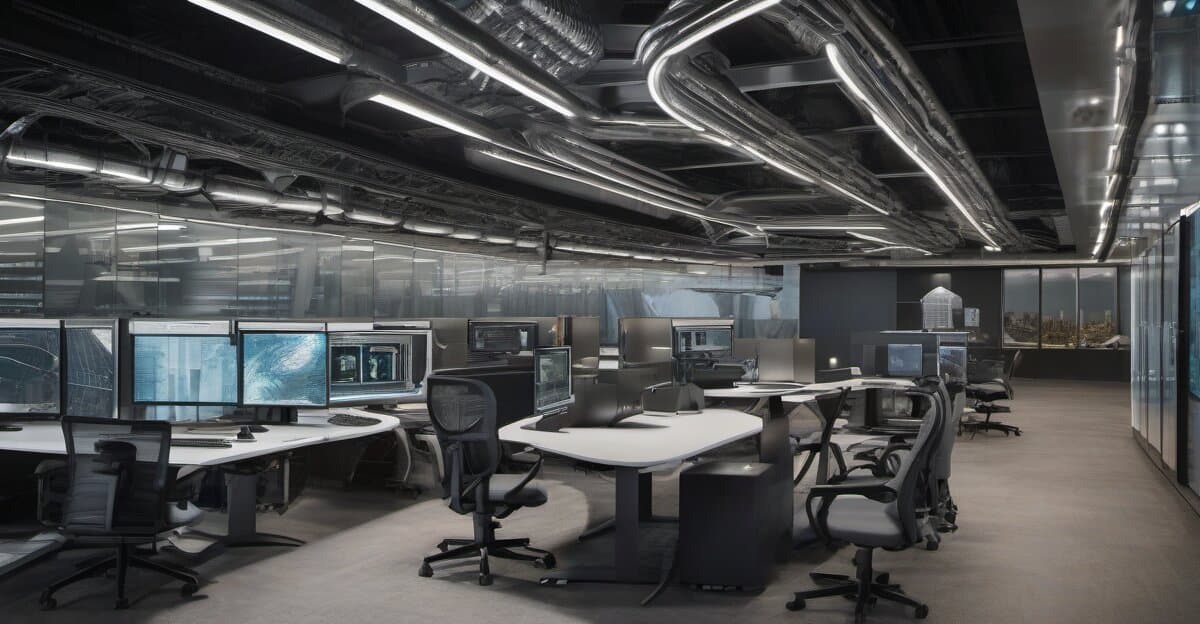
Something unprecedented is happening at the intersection of capital markets and computing infrastructure. The numbers that AI companies are now committing to hardware and energy would have seemed implausible just two years ago — and they are accelerating.
Anthropic has placed an $11 billion order for Google TPUs. OpenAI has secured a 10-gigawatt energy agreement — enough electricity to power roughly 7.5 million American homes — to feed its expanding data center footprint. Meta has issued aggressive capital expenditure guidance for 2026 that analysts describe as a generational infrastructure bet. NVIDIA, meanwhile, has unveiled its Vera Rubin platform, the next step in a hardware roadmap that has made the company the most consequential chokepoint in modern technology.
This is not incremental investment. This is an arms race with civilizational stakes.
Why the Scale Has Shifted So Dramatically
The proximate cause is competitive pressure. Every major AI lab understands that training frontier models requires not just better algorithms, but raw computational throughput that dwarfs what was needed even eighteen months ago. The relationship between compute and capability — long theorized through scaling laws — has proven durable enough that no serious player can afford to fall behind on infrastructure.
But there is a deeper driver: current AI systems still have significant capability gaps that demand continued R&D investment. Research from Berkeley Artificial Intelligence Research (BAIR) illustrates the problem concretely. The Visual Haystacks benchmark, which tests large multimodal models on sets of images rather than single inputs, found that state-of-the-art proprietary models — including GPT-4o, Claude-3 Opus, and Gemini-1.5-pro — drop to roughly 50% accuracy (effectively random guessing) when processing just 50 images in multi-needle tasks. LLaVA, a widely used open-source model, shows performance drops of up to 26.5% depending on where the relevant image appears in the input sequence.
These are not edge cases. Long-context and cross-image reasoning are central to enterprise deployment at scale. Closing these gaps requires better architectures — and training better architectures requires more compute.
The Hardware Layer as Strategic Moat
Anthropic's decision to anchor its compute strategy around Google TPUs rather than NVIDIA GPUs is particularly telling. It reflects both the maturation of alternative accelerator ecosystems and the strategic imperative to diversify supply chains. When a single lab places an $11 billion order for a specific chip architecture, it is not merely buying compute — it is shaping the roadmap of the hardware supplier and locking in preferential capacity for years.
OpenAI's energy play operates on a similar logic. By securing 10 gigawatts of power capacity, the company is effectively land-grabbing the physical substrate that future data centers will require. Energy constraints — not chip supply — may prove to be the binding limitation on AI scaling within the next three to five years, and the labs that secured power agreements early will have a structural advantage that cannot be replicated quickly.
Market Validation and What Comes Next
Public markets have taken notice. AI-native enterprise companies including Palantir and BigBear.ai posted dramatic stock rallies through 2025, reflecting investor conviction that enterprise AI adoption is crossing a genuine inflection point — not merely a hype cycle.
The next frontier for this infrastructure deployment appears to be fintech and payments. B2B payments market data and regulatory developments in Europe suggest that financial services represent the highest-concentration opportunity for applied AI at scale, with infrastructure built today positioned to capture that demand as it materializes.
The infrastructure supercycle is not a bubble. It is the physical manifestation of a strategic reality: in the AI era, the ability to train and serve models at scale is itself a durable competitive asset. The labs and hyperscalers making these commitments now are not speculating. They are building the roads before the traffic arrives.