
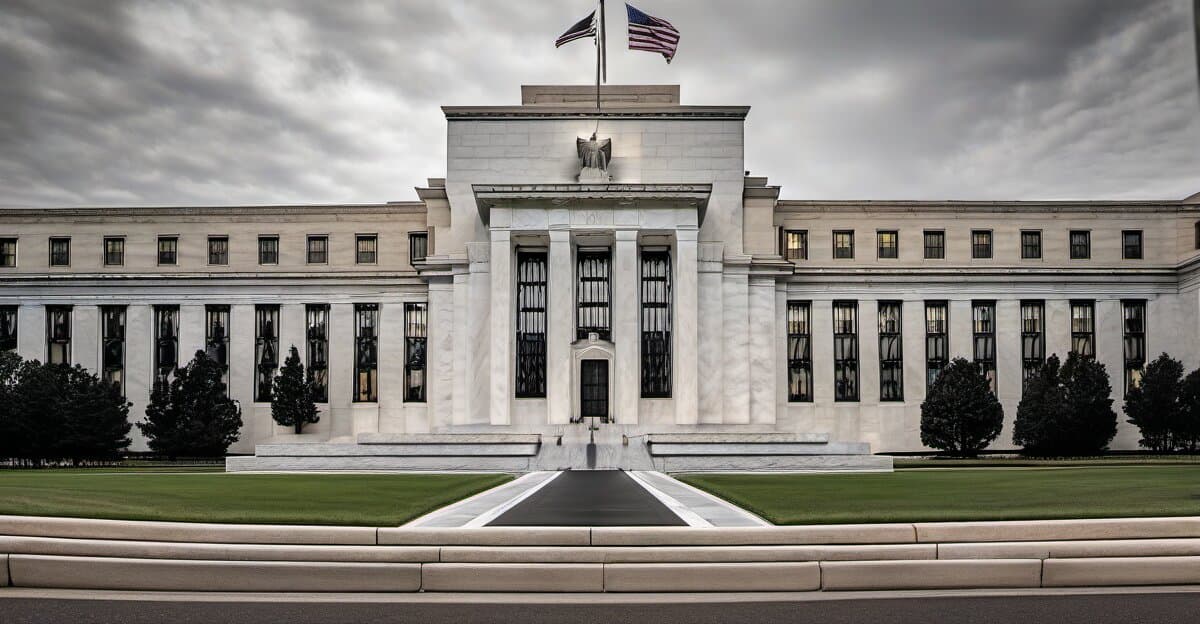
The Federal Reserve is holding firm on interest rates, and AI investment is a central reason why — though the picture that emerges is more complicated than headline numbers suggest.
Fed officials have signaled a higher bar for rate cuts, with Governor Philip Jefferson describing current rates as sitting in a "neutral range." The backdrop: an economy that looks resilient at the surface level, powered in significant part by unprecedented capital flowing into artificial intelligence infrastructure and acquisitions.
AI as the Engine of Top-Line Growth
Former Fed Governor Lael Brainard captured the dynamic bluntly: "The economy at the top level is strong, but again, it's being driven by this really important set of investments in AI. The rest of the economy under the hood is really stuck."
That assessment is borne out by the data. Second-quarter GDP growth came in at a robust 3.8%, with a similarly strong third quarter anticipated. Consumer spending has remained resilient. But analysts caution that stripping out AI-linked capital expenditure would reveal a far more fragile picture — one where inflation has hovered stubbornly near 3% for almost four years and lower-income households face a deepening affordability squeeze.
Landmark Deals Signal AI's Capital Market Dominance
The scale of money moving into AI is hard to overstate. CoreWeave, the GPU cloud computing specialist, recently secured a $1.17 billion contract — a figure that would have been headline news in any prior tech cycle but now barely registers as extraordinary. Meanwhile, SoftBank is exploring a potential acquisition of semiconductor designer Marvell Technology, a move that would represent one of the largest AI-adjacent hardware deals in recent memory.
These transactions reflect a structural shift: capital markets are increasingly bifurcating between AI-exposed assets commanding premium valuations and traditional sectors that are being left behind. The concentration of AI-driven wealth in a narrow band of companies, investors, and geographies is generating returns that skew aggregate economic statistics upward while masking underlying weakness.
Risks Accumulating Beneath the Surface
The risks are not going unnoticed. IMF First Deputy Managing Director Gita Gopinath has warned that an equity market correction of the magnitude seen in the dot-com bubble could erase $20 trillion in U.S. household wealth — a sobering reminder that AI enthusiasm, however well-founded, carries historical echoes.
Additional uncertainty stems from the policy environment. Trump administration tariffs and ongoing Supreme Court review of regulatory frameworks are complicating the Fed's already difficult calculus. Former Atlanta Fed President Dennis Lockhart suggested that whoever leads the Fed's next phase — with Kevin Warsh widely discussed as a potential future chair — will likely "follow the pattern that the FOMC has shown for years, and let the data tell you what's the right policy."
What Investors Should Watch
For investors and market participants, the current moment demands careful distinction between AI's genuine productivity promise and the financial distortions it is simultaneously generating. The sector's momentum — measured in billion-dollar contracts, strategic acquisitions, and infrastructure buildouts — is real. So is the risk that aggregate economic strength is being propped up by a narrow, valuation-sensitive pillar.
The Fed, for now, is content to watch and wait. Whether AI investment continues to validate that patience — or eventually exposes the structural divergence building underneath — may be the defining economic question of the next several quarters.