
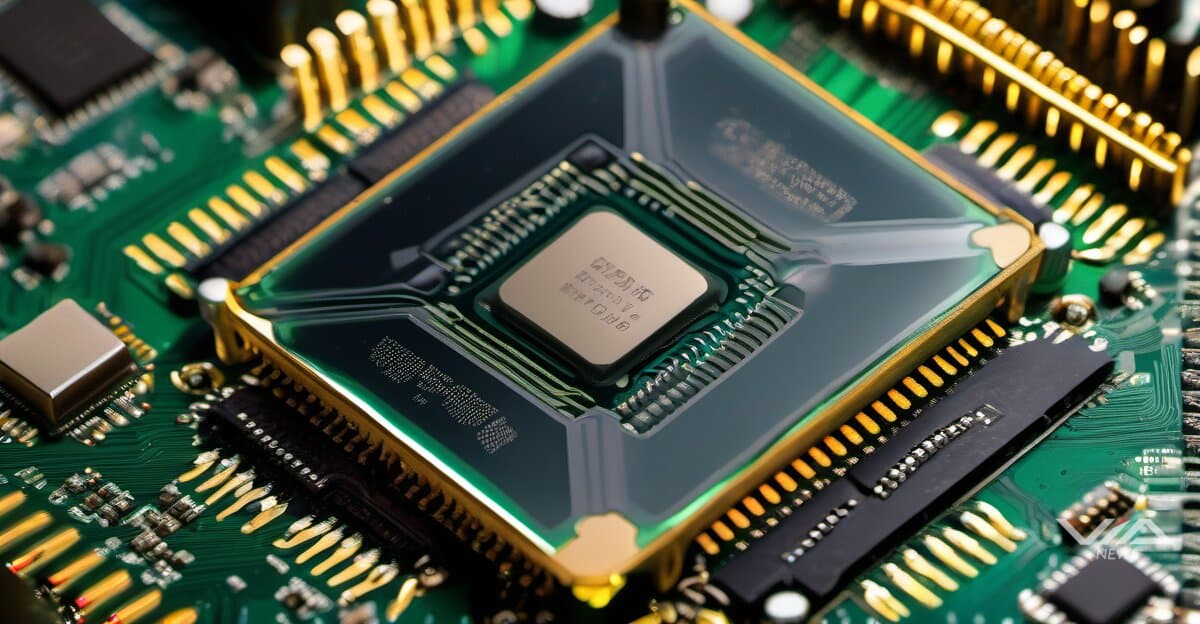
The semiconductor industry faces a 3-4% supply shortage driven by AI infrastructure buildout, with DRAM and NAND flash memory prices entering parabolic growth territory. The supply-demand imbalance affects chip availability for training clusters and inference deployments worldwide.
Nvidia stock climbed ahead of quarterly earnings, reflecting investor confidence in AI accelerator demand. The company dominates GPU sales for large language model training and deployment infrastructure.
Inspire Semiconductor launched its Thunderbird I datacenter accelerator targeting high-performance computing and AI workloads. The chip promises energy-efficient processing for graph analytics and compute-intensive applications, joining efforts to diversify beyond Nvidia's architecture.
Memory chip constraints create bottlenecks in AI systems where GPU utilization depends on rapid data transfer. DRAM shortages particularly impact training clusters that require hundreds of gigabytes of high-bandwidth memory per accelerator card.
The shortage occurs as hyperscalers expand AI infrastructure. Microsoft, Google, and Amazon compete for limited chip allocations while building out regional compute capacity.
Wolfspeed faces financial concerns despite supplying silicon carbide chips for Toyota electric vehicles and other automotive platforms. The company's technology supports high-voltage power systems in EVs through direct OEM relationships and Tier 1 partnerships.
STMicroelectronics announced support for Aliro 1.0 digital access standard, offering NFC, Bluetooth Low Energy, and ultra-wideband connectivity portfolios. The move targets smart access applications beyond datacenter infrastructure.
Specialized silicon for AI workloads represents industry attempts to solve performance-per-watt challenges. New accelerator designs target specific operations like matrix multiplication and transformer attention mechanisms.
Supply constraints force cloud providers to extend infrastructure buildout timelines. Some AI companies delay model training runs or reduce batch sizes to work within available compute budgets.
Industry analysts expect the shortage to persist through 2026 as fab capacity additions lag demand growth. Memory manufacturers increased capital expenditure but new production lines require 18-24 months to reach volume output.