
Saturday, September 5, 2026

AI Data Centers Face 30% Optical Component Shortage Through 2027

Lumentum, a key supplier of optical networking components for AI data centers, is undershipping customer demand by approximately 30% as manufacturing capacity fails to keep pace with AI infrastructure buildout. The company's order backlog has surged past $400 million, with all EML transceiver capacity locked into long-term agreements through late 2027.

AI Data Centers Face 30% Optical Component Shortage Through 2027
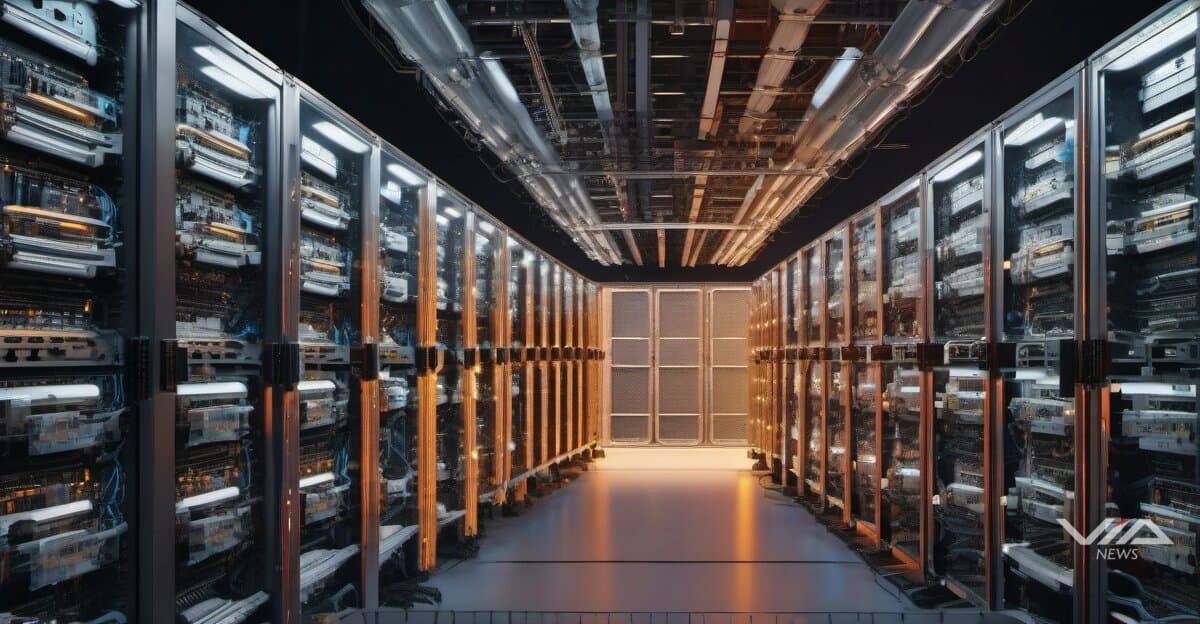
Image generated by AI for illustrative purposes. Not actual footage or photography from the reported events.
Loading stream...

Lumentum is shipping 30% below actual customer demand for optical networking components essential to AI data center operations. All externally modulated laser (EML) production capacity is committed through calendar 2027 under long-term supply agreements.

The company's optical communications segment (OCS) has accumulated over $400 million in order backlog, with most shipments scheduled for the second half of 2026. This backlog continues growing despite production increases.

EML transceivers enable high-speed data transmission between servers and across data center networks. AI training and inference workloads require massive interconnect bandwidth, making optical components a critical bottleneck as hyperscalers race to deploy GPU clusters.

Lumentum now supplies optical networking infrastructure for virtually every major AI deployment. As data center operators expand capacity, demand grows faster than new manufacturing lines come online, widening the supply gap rather than closing it.

The shortage affects delivery timelines across the AI infrastructure stack. Data center builders facing multi-quarter wait times for optical components may delay facility openings or scale back initial deployments.

Competing suppliers face similar capacity constraints. The optical transceiver market consolidated significantly over the past decade, leaving few manufacturers with the technical capability to produce components meeting AI data center specifications for bandwidth and power efficiency.

Industry analysts expect the imbalance to persist through 2027 as fab construction and equipment installation require 18-24 months. Hyperscaler capital expenditure plans for 2026-2027 assume component availability that current supply trajectories cannot support.

The bottleneck highlights infrastructure dependencies underlying AI deployment at scale. While GPU availability has improved since 2024 shortages, optical networking components now emerge as the limiting factor for connecting processors into functional training clusters.

Long-term supply agreements lock major customers into current capacity allocations but provide no mechanism for addressing demand exceeding contracted volumes. Spot market availability remains negligible as all production feeds existing commitments.

What we know · the intelligence behind this page
Live from the substrate
What we're seeing
AI Capital Surge Meets Investor Caution: Record Funding Rounds and Government Contracts Amid Valuation Skepticism
A single-week cluster of large AI/fintech funding rounds (Socure, Stability AI, Emerald AI, Generalist AI, Instinct, Gatik, Regent Craft) shows venture capital still pouring into AI infrastructure, identity, and autonomy plays, while Palantir's Army TITAN contract win coincided with a 6% stock drop — signaling that even flagship AI-defense revenue isn't immune to market reassessment of AI valuations. Efficiency-focused innovations like Multiverse Computing's model compression suggest the sector is also pivoting toward cost/inference economics as capital intensity draws scrutiny.
Our read on the data ›
Signals we're tracking
EPKINLY Regulatory-Clinical Success Cascade
High probability of expanded label indications, additional combination approvals, and competitive positioning strength in follicular lymphoma market. Predicts positive commercial uptake and potential accelerated review for related indications.
Patterns we're watching ›
Where sources disagree
Morgan Stanley & Co. LLC
The same metric (eps) for the same entity (Morgan Stanley & Co. LLC) reported for the identical fiscal period (Q1 2026) and observation date (2026-03-31) has two conflicting values: 3.43 USD_per_share vs 3.08 USD. This is not a temporal change — both observations claim to measure the same point in time. The ~10% discrepancy (0.35 USD difference) is material for a financial metric.
We flag conflicts openly ›
Recently verified
Checked against the original source
4,981
facts traced to their source — and we flag the ones that don't hold up.
101 entities tracked4,981 facts checked against source5,273 source documents archived
Query this data → isubstrate.com