
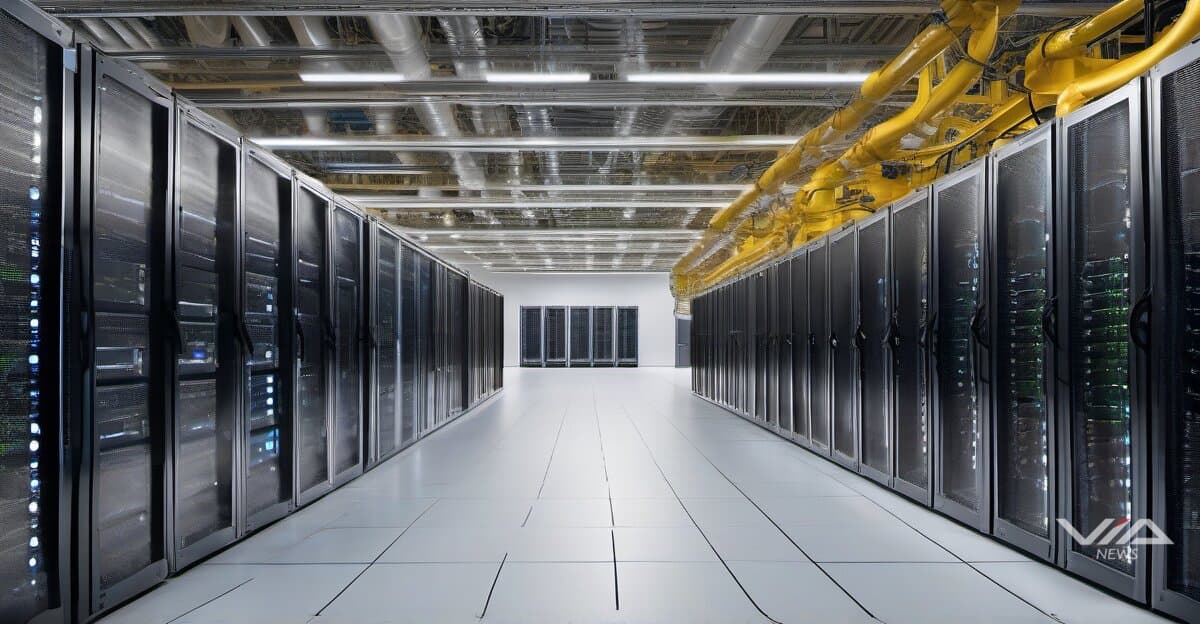
The artificial intelligence revolution is hitting an unexpected ceiling—not in algorithms or model architectures, but in the physical infrastructure required to power them. As enterprises and hyperscalers rush to deploy ever-larger AI systems, networking capacity, storage systems, and data center availability are becoming the defining bottlenecks that will determine who wins the race to scale.
Industry leaders are rapidly repositioning traditional enterprise technology as AI-first infrastructure. Cisco's newly announced Silicon One G300 chip powers the N9000 series switches with breakthrough 1.6 terabit scale-out performance, targeting the massive east-west traffic patterns characteristic of AI training clusters. "AI at scale demands open, standards-based networking that customers can deploy with confidence across diverse environments," said Yousuf Khan, emphasizing the shift from proprietary systems to standardized, interoperable architectures.
The integration challenge extends beyond raw bandwidth. Sven Oehme, a key voice in AI infrastructure design, noted that "at AI-factory scale, performance is no longer determined by the network or the data layer alone—it's defined by how tightly they work together." This convergence of networking and storage into unified AI infrastructure platforms represents a fundamental shift from siloed enterprise IT.
The capital intensity of this buildout is staggering. Market forecasts project the data center sector reaching trillion-dollar valuations as organizations scramble to secure compute capacity. OpenAI's multi-gigawatt GPU partnerships exemplify the scale of investment required, while companies like CleanSpark are redirecting bitcoin mining cash flows into what CEO Matt Schultz calls "long-duration infrastructure opportunities that we believe can drive significant shareholder value over time."
Even cryptocurrency mining operations are rebranding for the AI era. Bitfarms announced plans to rebrand as Keel Infrastructure, with CEO Ben Gagnon describing the keel as "the largely unseen but critical foundation that provides stability and converts energy into forward motion"—a metaphor for positioning as an infrastructure partner in what he termed "the HPC/AI revolution that will continue for years to come."
Yet this expansion faces mounting headwinds. Regulatory friction is intensifying, from Pentagon concerns over Anthropic partnerships to chipmaker lawsuits regarding Russian weapons systems. Local opposition to data center construction—driven by energy consumption, water usage, and environmental concerns—is creating permitting delays in key markets. The energy demands alone present existential challenges, with individual AI training clusters requiring power equivalent to small cities.
What emerges is a paradox: bullish capital deployment colliding with physical and regulatory constraints. The companies that successfully navigate this transition—building genuinely AI-native infrastructure while managing energy, regulatory, and community concerns—will control the critical path for the next generation of AI capabilities. As one infrastructure executive put it, the network and data layer working together now defines performance at AI-factory scale, making infrastructure the strategic chokepoint of the AI age.