
Saturday, September 5, 2026

GlobalFoundries Acquires Three IP Portfolios While Expanding Dresden Fab for AI Chip Production

GlobalFoundries acquired MIPS processor architecture, AMF, and filed to acquire Synopsys IP assets while expanding its Dresden facility capacity. The moves position the foundry to manufacture AI accelerators and edge computing chips as demand for specialized AI silicon outpaces general-purpose processor needs. The consolidation signals a shift from building new fabs to maximizing output at existing facilities.

GlobalFoundries Acquires Three IP Portfolios While Expanding Dresden Fab for AI Chip Production
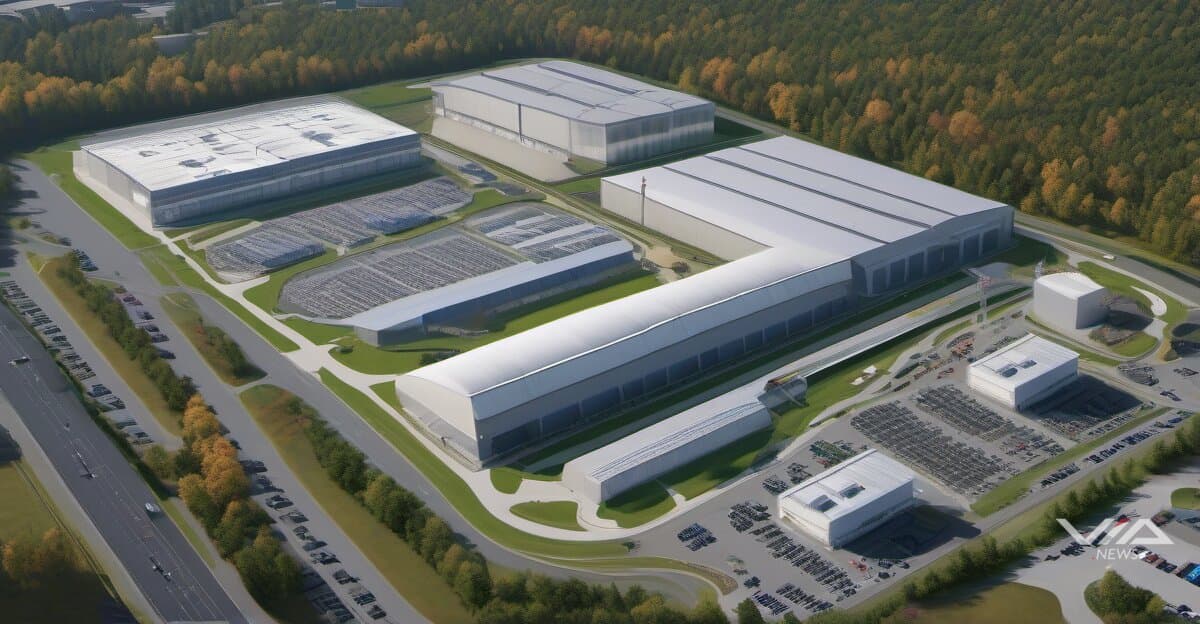
Image generated by AI for illustrative purposes. Not actual footage or photography from the reported events.
Loading stream...

GlobalFoundries completed acquisitions of MIPS processor IP and AMF while pursuing Synopsys intellectual property, paired with capacity expansion at its Dresden, Germany fabrication facility. The IP acquisitions give the foundry design tools for AI accelerator chips and edge computing processors.

The Dresden expansion increases wafer output for AI-specific process nodes without requiring greenfield construction. Established fabs can modify existing production lines faster than building new facilities, which typically require 3-5 years and $10-20 billion investments.

MIPS processor architecture supports custom AI accelerator designs that major cloud providers and automotive manufacturers need for inference workloads. AMF provides analog and mixed-signal capabilities essential for sensor integration in edge AI devices. The pending Synopsys IP acquisition would add electronic design automation tools to streamline chip development.

Semiconductor industry consolidation addresses AI chip supply constraints through three mechanisms: concentrated IP ownership reduces licensing complexity, expanded capacity at proven facilities decreases production risk, and vertical integration of design tools with manufacturing shortens development cycles.

AI accelerator demand differs from general computing chips. Training clusters need cutting-edge process nodes below 5nm, while inference chips often use mature 12nm-28nm processes with higher margins. GlobalFoundries operates in the mature node segment, matching edge AI and automotive AI requirements.

The strategy contrasts with TSMC and Samsung building new advanced fabs in Arizona and Texas. Mid-tier foundries like GlobalFoundries optimize existing assets rather than competing at bleeding-edge nodes. This creates supply chain diversification as AI hardware makers split orders between advanced training chips and mature inference chips.

Industry analysts project mature node capacity will grow 15-20% through 2027 as AI expands beyond data centers. Edge inference chips in smartphones, vehicles, and IoT devices outnumber cloud AI accelerators by volume. GlobalFoundries' Dresden expansion targets this higher-volume, lower-cost market segment.

The IP acquisitions also reduce dependency on ARM architecture for custom AI chips. Companies designing proprietary accelerators gain alternatives to ARM licensing terms, potentially lowering chip development costs by 10-15% according to semiconductor design consultants.

In this story

What we know · the intelligence behind this page
Live from the substrate
What we're seeing
AI Capital Surge Meets Investor Caution: Record Funding Rounds and Government Contracts Amid Valuation Skepticism
A single-week cluster of large AI/fintech funding rounds (Socure, Stability AI, Emerald AI, Generalist AI, Instinct, Gatik, Regent Craft) shows venture capital still pouring into AI infrastructure, identity, and autonomy plays, while Palantir's Army TITAN contract win coincided with a 6% stock drop — signaling that even flagship AI-defense revenue isn't immune to market reassessment of AI valuations. Efficiency-focused innovations like Multiverse Computing's model compression suggest the sector is also pivoting toward cost/inference economics as capital intensity draws scrutiny.
Our read on the data ›
Signals we're tracking
EPKINLY Regulatory-Clinical Success Cascade
High probability of expanded label indications, additional combination approvals, and competitive positioning strength in follicular lymphoma market. Predicts positive commercial uptake and potential accelerated review for related indications.
Patterns we're watching ›
Where sources disagree
Morgan Stanley & Co. LLC
The same metric (eps) for the same entity (Morgan Stanley & Co. LLC) reported for the identical fiscal period (Q1 2026) and observation date (2026-03-31) has two conflicting values: 3.43 USD_per_share vs 3.08 USD. This is not a temporal change — both observations claim to measure the same point in time. The ~10% discrepancy (0.35 USD difference) is material for a financial metric.
We flag conflicts openly ›
Recently verified
Checked against the original source
4,981
facts traced to their source — and we flag the ones that don't hold up.
101 entities tracked4,981 facts checked against source5,273 source documents archived
Query this data → isubstrate.com