
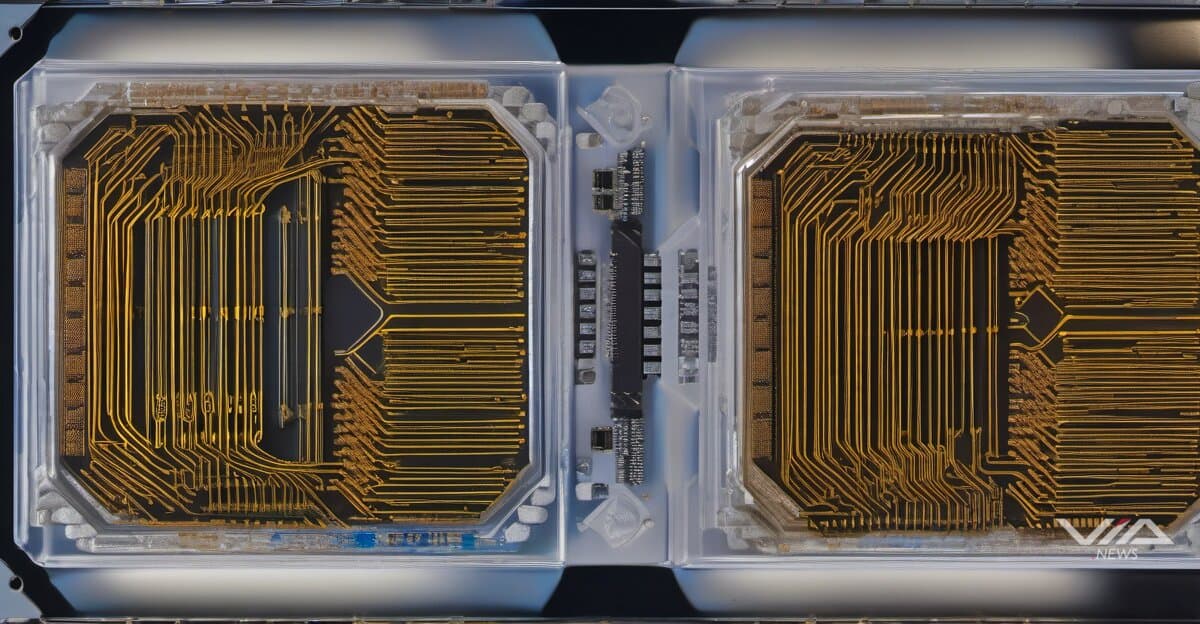
Memory bandwidth has emerged as the critical bottleneck for AI workloads. LLM training and inference require rapid data movement between processing units and memory, favoring high-bandwidth memory (HBM) over traditional computing architectures. This technical reality redirects capital toward memory fabrication capacity and away from conventional processor development.
The performance gap signals a structural shift rather than a market cycle. AI training clusters prioritize memory-rich configurations, with GPU servers requiring multiple HBM modules per card to prevent throughput constraints. Traditional CPU-centric designs, optimized for sequential processing tasks, offer fewer advantages in parallel AI computation.
Investment flows follow the divergence. Memory manufacturers face capacity constraints as hyperscalers expand AI infrastructure, while legacy CPU producers confront declining relevance in the fastest-growing segment of data center spending. The pattern suggests consolidation ahead, with acquirers likely targeting memory fab capacity rather than processor design teams.
The bifurcation extends beyond stock performance to capital allocation across the semiconductor industry. Companies with HBM production capabilities command premium valuations, while those dependent on traditional logic chip sales face margin pressure. This revaluation reflects multi-year demand forecasts centered on AI infrastructure rather than PC or mobile device volumes.
Market observers expect the trend to accelerate as AI model sizes grow and inference deployment scales. Memory bandwidth requirements increase with parameter counts, reinforcing demand for specialized memory products. The pattern points to sustained outperformance for memory suppliers and continued challenges for CPU-focused manufacturers unable to pivot toward AI-optimized architectures.
Sources:
1 Via News Signal Detection System, April 13, 2026