
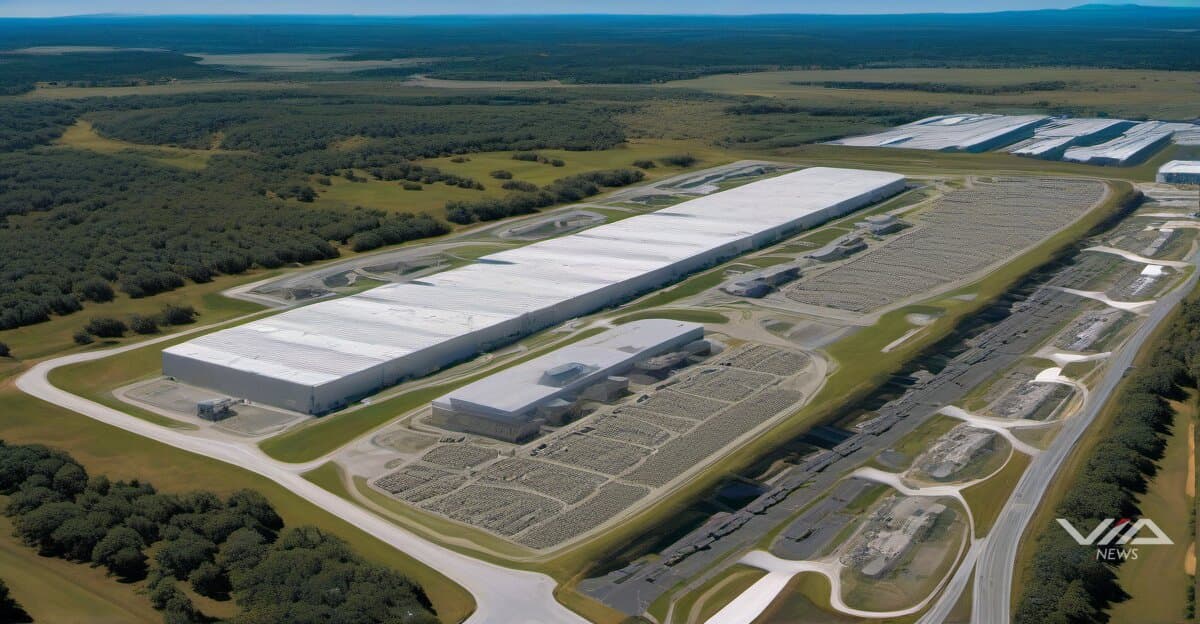
Nvidia projects $1 trillion in chip sales through 2027, announced at its GTC conference, as semiconductor manufacturers race to expand AI chip production capacity.1
Micron is acquiring new fabrication facilities dedicated to High-Bandwidth Memory (HBM) production, the critical memory technology that connects to AI accelerators. Meta has committed $12 billion to AI infrastructure partnerships, signaling continued enterprise demand for training and inference hardware.2
The expansion spans both established AI accelerator platforms and next-generation architectures. Traditional GPU and custom accelerator manufacturers like AWS Tranium are scaling production of proven training chips. Simultaneously, specialized semiconductor startups are developing alternatives optimized for specific AI workloads.1
Olix, a photonic chip developer, plans to ship its first product in 2027.2 The company represents a wave of startups building inference-optimized processors and Language Processing Units designed to reduce power consumption and latency for deployed AI models.
The semiconductor supply chain transformation addresses bottlenecks that have constrained AI development. HBM production capacity directly limits the number of high-performance AI chips manufacturers can produce, as each accelerator requires multiple HBM dies stacked vertically to achieve necessary memory bandwidth.
Industry demand reflects the dual requirements of AI companies: massive training clusters for frontier model development and distributed inference infrastructure for deployment at scale. Training workloads favor maximum memory bandwidth and floating-point performance. Inference workloads prioritize throughput, latency, and power efficiency.
The trillion-dollar sales projection indicates expectations for sustained multi-year buildout of AI data centers. Cloud providers, AI labs, and enterprises continue ordering chips despite uncertainty about return on infrastructure investments. Semiconductor manufacturers are responding by committing to multi-billion dollar facility expansions with multi-year lead times.
Specialized chip architectures targeting inference and specific AI tasks may capture market share from general-purpose accelerators as companies optimize deployed model costs. Photonic chips promise lower energy consumption per operation, critical for inference workloads running continuously at scale.