
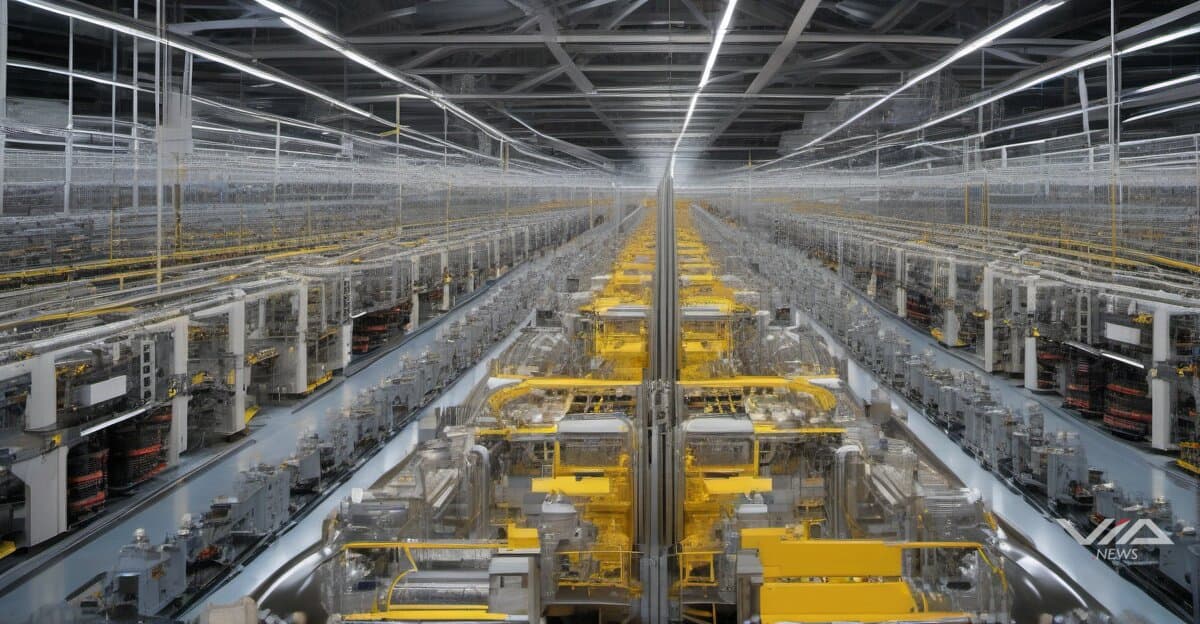
Semiconductor manufacturers are expanding production lines for AI-optimized chips as data center and edge computing infrastructure demand intensifies. Intel announced capacity expansion at its foundry operations to support AI accelerator production, while Silicon Motion is scaling controller chip manufacturing for AI storage systems.1,2,3
The shift toward AI-specific semiconductor production is driving changes in packaging technology and chip architecture. Companies are investing in advanced packaging capabilities required for high-bandwidth memory integration and multi-chip modules used in machine learning processors. LG Innotek is developing sensing modules for autonomous systems using specialized semiconductor components, targeting partnerships with global automotive manufacturers.4
Manufacturing capacity allocation is tilting toward AI workloads across product lines. Silicon Motion's customer base spans NAND flash vendors, storage module makers, and OEMs requiring controllers optimized for AI data processing.3 Navitas Semiconductor is expanding production of power semiconductors used in AI server infrastructure and edge computing devices.1
Supply chain restructuring is creating pressure on rare earth material sourcing and component availability. U.S. regulatory actions targeting Chinese rare earth materials in defense systems are forcing semiconductor manufacturers to diversify supply networks. This is affecting production planning for specialized chips used in both commercial AI applications and defense-related systems.
Capital investment from institutional investors is flowing into semiconductor companies positioned for AI infrastructure growth. Wolfspeed refinanced debt to reduce annual interest expense by approximately $62 million, freeing capital for production expansion of silicon carbide chips used in AI power systems.5
Manufacturing lead times for AI-optimized semiconductors remain extended as foundries prioritize capacity allocation. The competition for advanced packaging services and specialized production slots is intensifying among chipmakers serving machine learning markets. Companies are securing long-term supply agreements to guarantee capacity access as AI infrastructure deployment accelerates globally.