
Saturday, September 5, 2026

$650B AI CapEx Wave Hits as Broadcom's Custom Chip Clients Near Simultaneous Launch

The Big Four AI hyperscalers are collectively committing approximately $650B in AI capital expenditure. Multiple Broadcom custom chip clients are approaching launch at the same time, signaling coordinated infrastructure scaling. Analysts expect sustained demand for AI semiconductors, power infrastructure, and networking equipment over the next two to four quarters.

LM Salvado

May 19, 2026

$650B AI CapEx Wave Hits as Broadcom's Custom Chip Clients Near Simultaneous Launch
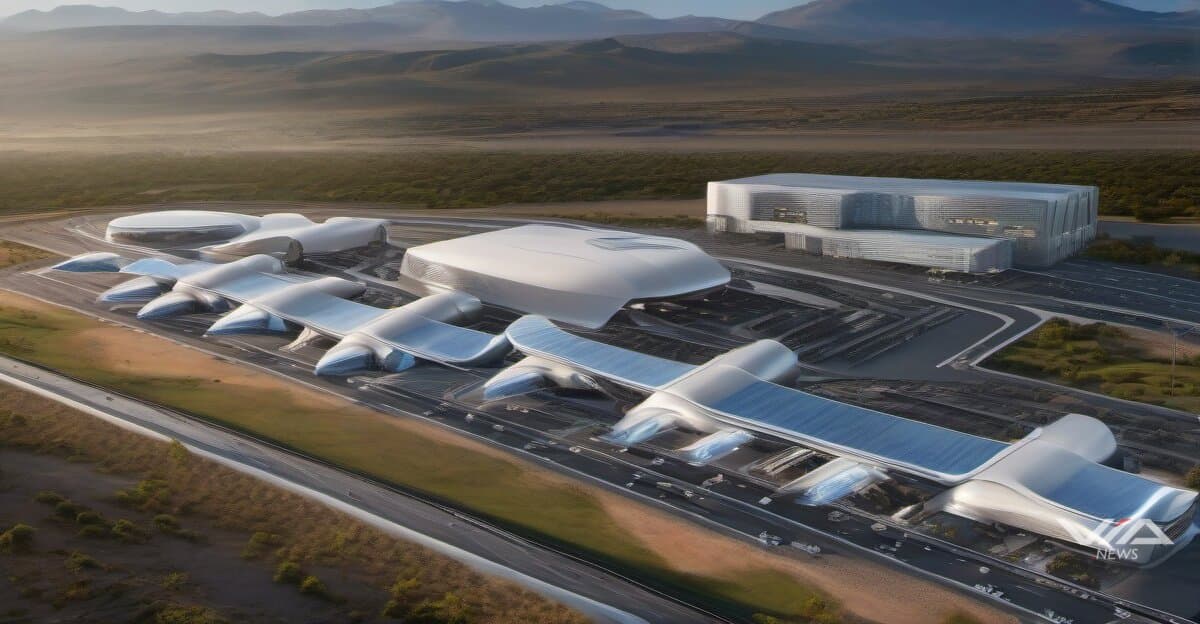
Image generated by AI for illustrative purposes. Not actual footage or photography from the reported events.
Loading stream...

The Big Four AI hyperscalers are committing a combined ~billions in AI capital expenditure — and their custom silicon programs are converging on launch simultaneously.1

Multiple Broadcom clients developing custom AI accelerators are nearing production at roughly the same time.1 The overlap is not coincidental. Hyperscalers plan infrastructure years in advance, and coordinated launch windows suggest a shared view on when the next wave of AI workloads will demand dedicated silicon at scale.

Custom chips offer hyperscalers a key advantage over merchant silicon: tight co-design between the accelerator and the workload. Google's TPUs, Meta's MTIA, and similar programs allow these companies to optimize for their specific training and inference tasks rather than buying general-purpose GPUs at a premium. Broadcom has positioned itself as the dominant partner for this approach, providing the ASIC design and packaging expertise that hyperscalers need but rarely build in-house.

The billions CapEx figure spans data center construction, power infrastructure, networking, and semiconductor procurement.1 Power and cooling suppliers stand to benefit directly — large-scale AI clusters require dense power delivery and liquid cooling that standard facilities cannot support.

Networking is the other pressure point. As custom accelerators multiply across hyperscaler fleets, the interconnect fabric tying them together becomes a bottleneck. High-bandwidth networking equipment suppliers are positioned alongside chip designers for a multi-quarter demand surge.1

For Broadcom (AVGO) specifically, simultaneous client launches translate into concentrated near-term revenue from custom ASIC tape-outs, packaging, and networking ASICs. Nvidia (NVDA) benefits differently: even as hyperscalers build custom silicon, merchant GPU demand for third-party cloud customers and enterprise AI deployments remains strong. The two dynamics run in parallel rather than canceling each other out.

Upward earnings revisions for chip designers, power management suppliers, and cooling vendors are expected across the next two to four quarters as this infrastructure wave materializes.1

The scale of commitment — billions across four companies — also sets a floor under AI infrastructure investment that makes cyclical pullback less likely in the near term. Hyperscalers have signaled these budgets publicly, creating accountability to investors that makes mid-cycle cuts politically difficult.

In this story

About this analysis

This is a Via News analysis. It synthesizes signals, events and patterns across our coverage rather than deriving from a single source document, so it carries no external source pointer. Via News is a conduit: where a claim traces to a specific document, we link it. How we source

LM Salvado

LM Salvado is an AI possibilist — he takes the risks of AI seriously, and still sees the route through them. Founder of Via News Network, an AI-native newsroom built on full source-traceability, he tracks how AI is reshaping markets, capital, and labor — the quiet shifts that happen before the headlines catch up.

What we know · the intelligence behind this page
Live from the substrate
What we're seeing
AI Capital Surge Meets Investor Caution: Record Funding Rounds and Government Contracts Amid Valuation Skepticism
A single-week cluster of large AI/fintech funding rounds (Socure, Stability AI, Emerald AI, Generalist AI, Instinct, Gatik, Regent Craft) shows venture capital still pouring into AI infrastructure, identity, and autonomy plays, while Palantir's Army TITAN contract win coincided with a 6% stock drop — signaling that even flagship AI-defense revenue isn't immune to market reassessment of AI valuations. Efficiency-focused innovations like Multiverse Computing's model compression suggest the sector is also pivoting toward cost/inference economics as capital intensity draws scrutiny.
Our read on the data ›
Signals we're tracking
EPKINLY Regulatory-Clinical Success Cascade
High probability of expanded label indications, additional combination approvals, and competitive positioning strength in follicular lymphoma market. Predicts positive commercial uptake and potential accelerated review for related indications.
Patterns we're watching ›
Where sources disagree
Morgan Stanley & Co. LLC
The same metric (eps) for the same entity (Morgan Stanley & Co. LLC) reported for the identical fiscal period (Q1 2026) and observation date (2026-03-31) has two conflicting values: 3.43 USD_per_share vs 3.08 USD. This is not a temporal change — both observations claim to measure the same point in time. The ~10% discrepancy (0.35 USD difference) is material for a financial metric.
We flag conflicts openly ›
Recently verified
Checked against the original source
4,981
facts traced to their source — and we flag the ones that don't hold up.
101 entities tracked4,981 facts checked against source5,273 source documents archived
Query this data → isubstrate.com