
Sunday, September 6, 2026

Google TPU and Deep Learning Models Power Next-Gen Crypto Trading Platforms

Advanced AI infrastructure including Google TPUs and Gemini 3 is reshaping crypto trading platforms. Flow Traders launched deep learning market making systems while BitMart deployed multi-product AI trading tools. Retail platform nof1.ai now runs real-capital AI trading competitions.

Google TPU and Deep Learning Models Power Next-Gen Crypto Trading Platforms
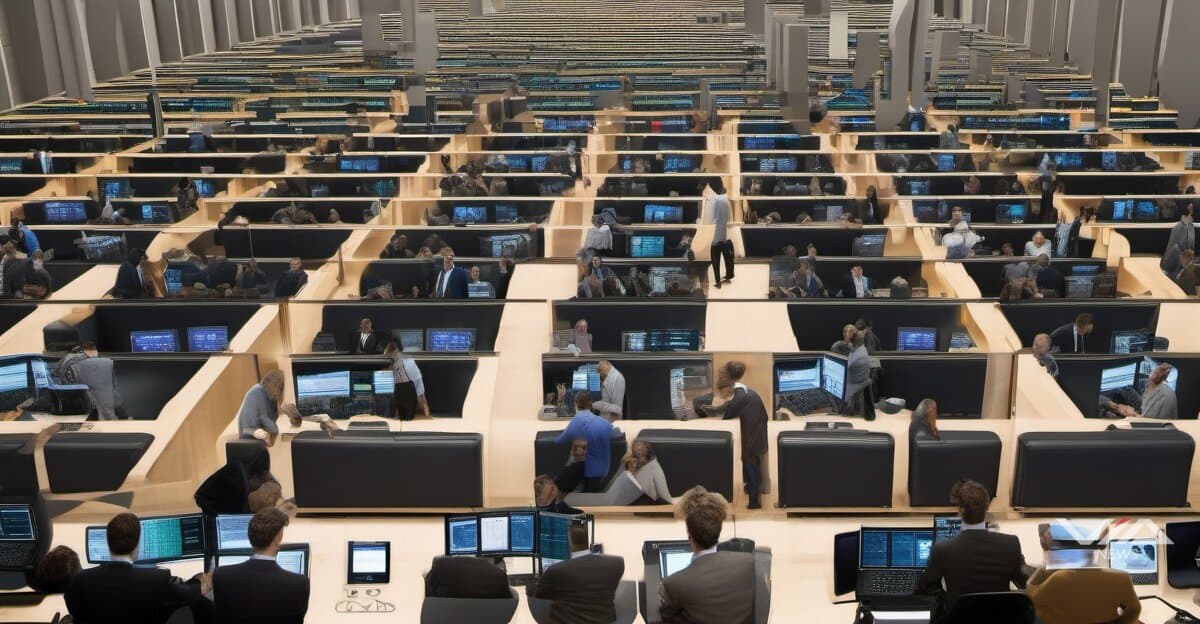
Image generated by AI for illustrative purposes. Not actual footage or photography from the reported events.
Loading stream...

Google TPUs and advanced deep learning models are driving a transformation in crypto trading infrastructure, with institutional market makers and retail platforms deploying AI-powered systems for algorithmic trading.

Flow Traders, a major market making firm, launched a deep learning initiative targeting crypto market operations. The platform uses neural networks to optimize trade execution and liquidity provision across digital asset exchanges.

BitMart rolled out a multi-product AI trading ecosystem that integrates machine learning models for price prediction, risk management, and automated order routing. The exchange reported increased trading efficiency following the AI deployment.

Retail traders gained access to institutional-grade AI tools through nof1.ai, which runs competitions using real capital. The platform allows users to test trading algorithms against live market conditions, democratizing access to AI-powered trading infrastructure previously limited to hedge funds and market makers.

Google's Gemini 3 language model is being integrated into trading platforms for sentiment analysis and news-based signal generation. The model processes social media feeds, regulatory filings, and market commentary to generate trading signals.

The AI trading infrastructure buildout comes as crypto markets face regulatory changes. Tether's USDT faced rating downgrades from credit assessors, while European regulators approved the first Bittensor exchange-traded product, signaling growing institutional acceptance of AI-focused crypto projects.

Bitcoin volatility created a testing ground for AI trading systems. The cryptocurrency reached all-time highs before entering a correction cycle, providing diverse market conditions for machine learning models to train on.

TPU infrastructure costs remain a barrier for smaller trading operations. Google's tensor processing units deliver superior performance for deep learning workloads compared to traditional GPUs, but require significant capital investment and technical expertise to deploy effectively.

Market makers report that AI-driven systems reduced latency and improved fill rates during high-volatility periods. The technology enables faster response to market movements and better risk management across multiple trading pairs simultaneously.

The convergence of AI infrastructure and crypto markets is creating new competitive dynamics where computational power and model sophistication determine trading performance as much as traditional financial analysis.

Source documents

Via News is a conduit. We point to the source documents behind this report — we don't replace them. Trace any claim to its source and decide what to trust. How we source

Source Trace Score3 source documents3 with a live linkVerifiability: Strong
  1. [1]Press releaseGlobeNewswire· January 13, 2026
    BitMart 2025 Annual Review: Building a More Complete Financial Infrastructure to Drive Long-Term Sustainable Growth
  2. [2]Press releaseGlobeNewswire· December 5, 2025
    CoinEx Research November 2025 Report: Painvember's Brutal Reality Check
  3. [3]News articleYahoo Finance· February 12, 2026
    Flow Traders 4Q and FY 2025 Results

In this story

What we know · the intelligence behind this page
Live from the substrate
What we're seeing
AI Capital Surge Meets Investor Caution: Record Funding Rounds and Government Contracts Amid Valuation Skepticism
A single-week cluster of large AI/fintech funding rounds (Socure, Stability AI, Emerald AI, Generalist AI, Instinct, Gatik, Regent Craft) shows venture capital still pouring into AI infrastructure, identity, and autonomy plays, while Palantir's Army TITAN contract win coincided with a 6% stock drop — signaling that even flagship AI-defense revenue isn't immune to market reassessment of AI valuations. Efficiency-focused innovations like Multiverse Computing's model compression suggest the sector is also pivoting toward cost/inference economics as capital intensity draws scrutiny.
Our read on the data ›
Signals we're tracking
EPKINLY Regulatory-Clinical Success Cascade
High probability of expanded label indications, additional combination approvals, and competitive positioning strength in follicular lymphoma market. Predicts positive commercial uptake and potential accelerated review for related indications.
Patterns we're watching ›
Where sources disagree
Morgan Stanley & Co. LLC
The same metric (eps) for the same entity (Morgan Stanley & Co. LLC) reported for the identical fiscal period (Q1 2026) and observation date (2026-03-31) has two conflicting values: 3.43 USD_per_share vs 3.08 USD. This is not a temporal change — both observations claim to measure the same point in time. The ~10% discrepancy (0.35 USD difference) is material for a financial metric.
We flag conflicts openly ›
Recently verified
Checked against the original source
4,981
facts traced to their source — and we flag the ones that don't hold up.
101 entities tracked4,981 facts checked against source5,273 source documents archived
Query this data → isubstrate.com