
Saturday, September 5, 2026

Serve Robotics deploys autonomous delivery fleet across 20 U.S. cities, securing Uber Eats and DoorDash partnerships

Serve Robotics now operates autonomous delivery robots in 20 cities spanning 6 major metro areas from Los Angeles to Washington D.C. The company has secured partnerships with both Uber Eats and DoorDash, covering over 80% of the U.S. food delivery market. The expansion marks a shift from pilot programs to commercial-scale deployment of autonomous delivery systems.

LM Salvado

March 15, 2026

Serve Robotics deploys autonomous delivery fleet across 20 U.S. cities, securing Uber Eats and DoorDash partnerships
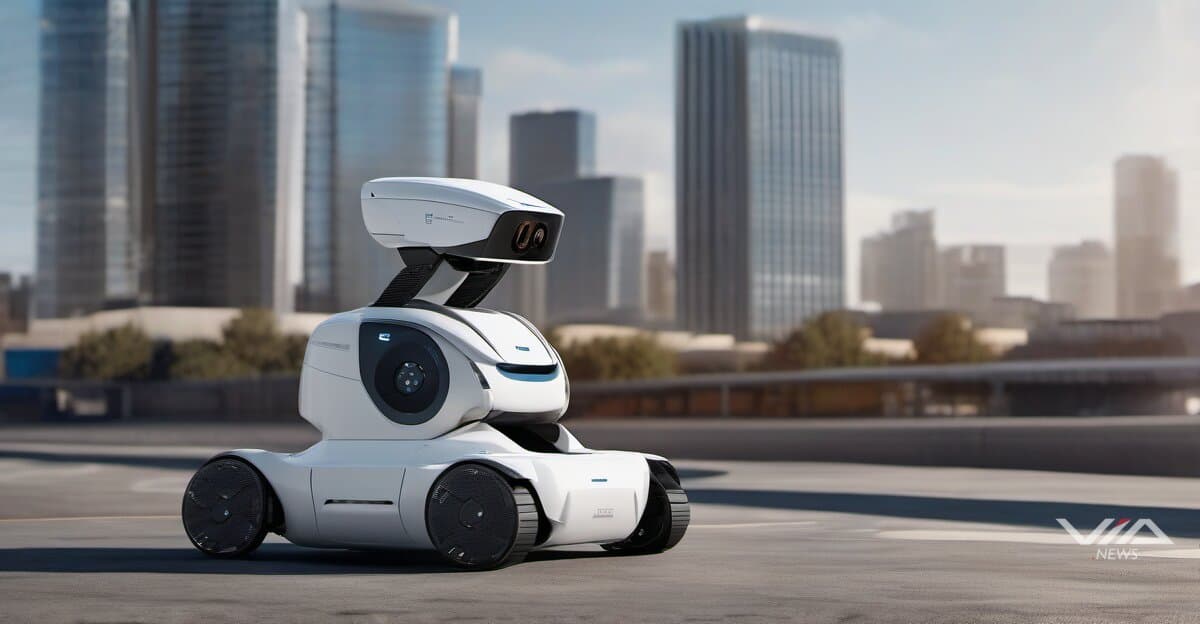
Image generated by AI for illustrative purposes. Not actual footage or photography from the reported events.
Loading stream...

Serve Robotics operates autonomous delivery robots across 20 cities in 6 major U.S. metro areas, including Los Angeles and Washington D.C. The company runs a multi-platform fleet integrated with both Uber Eats and DoorDash, giving it access to over 80% of the American food delivery market.

The geographic spread represents a significant scaling milestone for sidewalk delivery robots. Most autonomous vehicle companies remain confined to limited pilot zones, while Serve has expanded operations coast-to-coast.

Dual-platform integration with competing delivery services indicates standardization in robotics APIs and operational protocols. Uber Eats and DoorDash typically compete for exclusive restaurant partnerships, making simultaneous robotics deployment notable.

The expansion suggests autonomous delivery has cleared key regulatory barriers in multiple jurisdictions. Each city requires separate permits for sidewalk robot operations, with varying rules on speed limits, operational hours, and safety requirements.

Serve's robots handle last-mile delivery autonomously, navigating sidewalks, crosswalks, and urban obstacles without human intervention. The company uses remote monitoring for edge cases but operates primarily in autonomous mode.

Commercial viability depends on unit economics: robot deployment costs versus human courier payments. Food delivery margins are thin, with platforms paying $3-8 per delivery to couriers. Robots require upfront capital but eliminate per-delivery labor costs.

The deployment scale provides operational data unavailable in small pilots. Twenty-city operation generates information on weather performance, pedestrian interaction, theft prevention, and maintenance requirements across diverse urban environments.

Competition in autonomous delivery includes Starship Technologies, which claims 6 million deliveries globally, and Amazon's Scout program. Starship focuses on college campuses and suburbs, while Serve targets dense urban markets.

The infrastructure required—charging stations, maintenance facilities, remote operation centers—represents fixed costs that improve with scale. Twenty cities suggest Serve has reached the threshold where expansion accelerates profitability rather than burning capital.

Multi-city autonomous operations also test regulatory frameworks. Success or failure patterns across jurisdictions will inform future robot deployment rules nationwide.

In this story

LM Salvado

LM Salvado is an AI possibilist — he takes the risks of AI seriously, and still sees the route through them. Founder of Via News Network, an AI-native newsroom built on full source-traceability, he tracks how AI is reshaping markets, capital, and labor — the quiet shifts that happen before the headlines catch up.

What we know · the intelligence behind this page
Live from the substrate
What we're seeing
AI Capital Surge Meets Investor Caution: Record Funding Rounds and Government Contracts Amid Valuation Skepticism
A single-week cluster of large AI/fintech funding rounds (Socure, Stability AI, Emerald AI, Generalist AI, Instinct, Gatik, Regent Craft) shows venture capital still pouring into AI infrastructure, identity, and autonomy plays, while Palantir's Army TITAN contract win coincided with a 6% stock drop — signaling that even flagship AI-defense revenue isn't immune to market reassessment of AI valuations. Efficiency-focused innovations like Multiverse Computing's model compression suggest the sector is also pivoting toward cost/inference economics as capital intensity draws scrutiny.
Our read on the data ›
Signals we're tracking
EPKINLY Regulatory-Clinical Success Cascade
High probability of expanded label indications, additional combination approvals, and competitive positioning strength in follicular lymphoma market. Predicts positive commercial uptake and potential accelerated review for related indications.
Patterns we're watching ›
Where sources disagree
Morgan Stanley & Co. LLC
The same metric (eps) for the same entity (Morgan Stanley & Co. LLC) reported for the identical fiscal period (Q1 2026) and observation date (2026-03-31) has two conflicting values: 3.43 USD_per_share vs 3.08 USD. This is not a temporal change — both observations claim to measure the same point in time. The ~10% discrepancy (0.35 USD difference) is material for a financial metric.
We flag conflicts openly ›
Recently verified
Checked against the original source
4,981
facts traced to their source — and we flag the ones that don't hold up.
101 entities tracked4,981 facts checked against source5,273 source documents archived
Query this data → isubstrate.com