
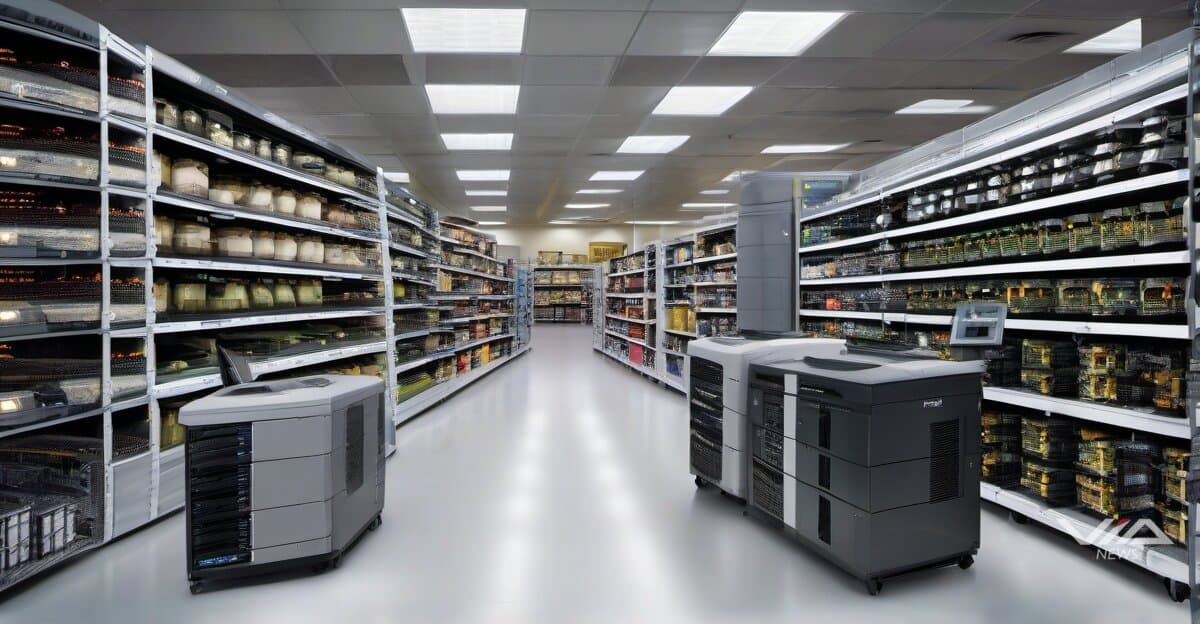
Computer vision technology is entering production deployment across retail and industrial applications after years of pilot programs. Major technology providers are shipping agentic AI systems with vision capabilities designed for store operations, asset management, and autonomous navigation.
Microsoft and Supermicro have launched enterprise computer vision platforms targeting retail environments. These systems use vision models to monitor inventory levels, track customer movement patterns, and manage checkout processes without human intervention. The technology processes video feeds in real-time to trigger actions like restocking alerts or security notifications.
Industrial facilities are deploying vision-enabled autonomous systems for warehouse navigation and quality control. Vision models identify defects on production lines, guide robotic picking systems, and monitor safety compliance across factory floors. These deployments require edge computing infrastructure to process video data with latency under 100 milliseconds for real-time decision-making.
The production shift coincides with semiconductor earnings showing AI infrastructure demand. Vision processing requires specialized accelerators beyond standard GPU compute, driving adoption of purpose-built edge AI chips. Retailers and manufacturers are installing dedicated vision processing units at store and facility level rather than relying on cloud inference.
Agentic AI architectures combine vision models with decision-making systems that take autonomous actions. A retail system might detect low shelf inventory through computer vision, check warehouse stock levels, and automatically generate restocking orders without human review. Industrial applications use vision to identify equipment failures and autonomously schedule maintenance.
Enterprise adoption patterns show vision capabilities moving beyond security cameras to operational systems. Retailers report vision systems handling 60-70% of inventory monitoring tasks previously done by staff. Industrial deployments show 40% reduction in quality control inspection time when vision systems pre-screen products before human review.
The technology requires training on domain-specific data. Retail vision models learn store layouts, product packaging, and customer behavior patterns. Industrial models train on defect examples, equipment configurations, and safety scenarios specific to each facility type.