
Saturday, September 5, 2026

Eaton's $4.3B Boyd Thermal Acquisition Faces Regulatory Risk as AI Data Centers Expand Cooling Needs

Eaton's pending acquisition of Boyd Thermal, announced in 2025, faces potential regulatory delays or conditions from merger control authorities. The deal targets liquid cooling infrastructure as AI data centers require advanced thermal management systems. Regulatory intervention could disrupt cooling supply chains during peak AI infrastructure buildout.

Eaton's $4.3B Boyd Thermal Acquisition Faces Regulatory Risk as AI Data Centers Expand Cooling Needs
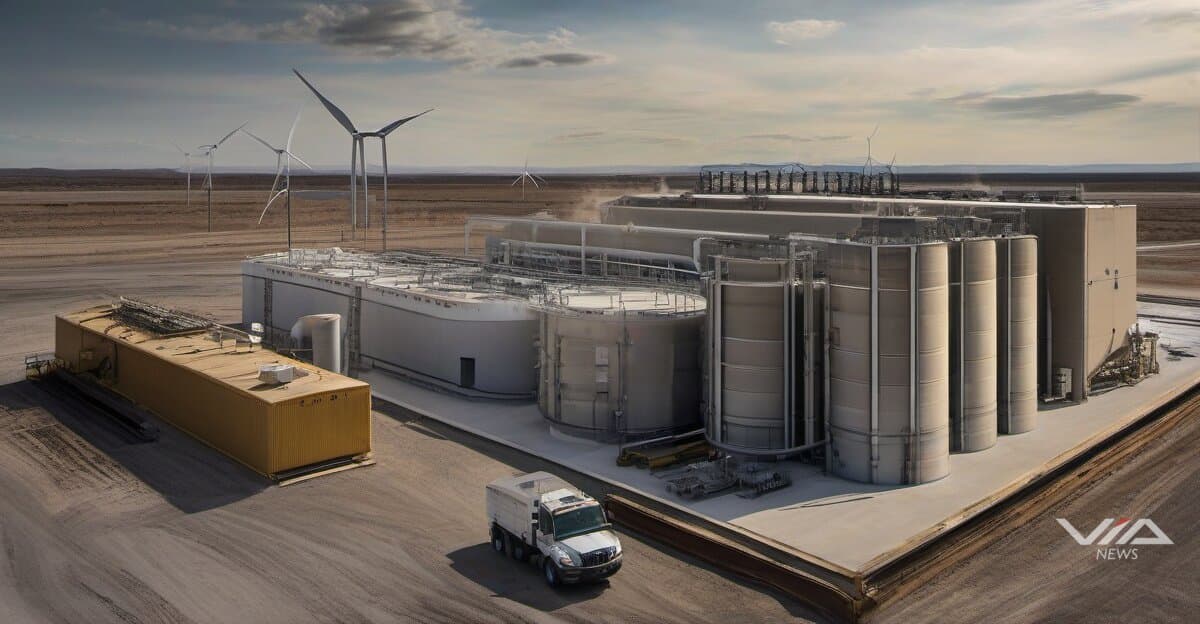
Image generated by AI for illustrative purposes. Not actual footage or photography from the reported events.
Loading stream...

Eaton's $4.3 billion acquisition of Boyd Thermal faces regulatory approval uncertainty as merger control authorities review the transaction. The thermal management company specializes in liquid cooling systems now critical for AI data center operations.

Boyd Thermal produces two-phase immersion cooling and direct-to-chip liquid cooling systems. These technologies handle heat loads from GPU clusters running large language models and machine learning workloads. NVIDIA H100 clusters generate 700W per GPU, requiring liquid cooling above certain rack densities.

Regulatory authorities may impose conditions or block the deal entirely. Merger control reviews typically examine market concentration in critical infrastructure sectors. Eaton already holds significant market share in electrical power distribution systems for data centers. Adding Boyd's thermal management portfolio creates vertical integration across power and cooling infrastructure.

The timing affects AI infrastructure expansion. Cloud providers including Microsoft, Google, and Meta are deploying liquid-cooled data centers in 2026. Amazon Web Services announced 15 new data center regions requiring advanced cooling by 2027. Regulatory delays could constrain cooling equipment availability during this buildout phase.

Alternative suppliers exist but face capacity constraints. Vertiv and Schneider Electric produce competing liquid cooling systems. However, Boyd Thermal's two-phase immersion technology uses proprietary dielectric fluids with specific thermal properties. Switching suppliers mid-deployment requires facility redesigns and extended timelines.

The transaction includes Boyd's manufacturing facilities in North America, Europe, and Asia. Geographic production capacity matters for supply chain resilience. Data center operators prefer regional suppliers to reduce shipping times for custom cooling loops and replacement components.

Regulatory outcomes range from unconditional approval to divestiture requirements. Authorities may require Eaton to sell overlapping product lines or maintain Boyd as a separate business unit. Each outcome affects pricing and availability for data center operators planning 2026-2027 deployments.

The deal announcement preceded the current AI infrastructure surge. Training runs for frontier models now require 10,000+ GPU clusters generating megawatts of heat in single facilities. Cooling infrastructure became a deployment bottleneck alongside power capacity and chip availability.

In this story

What we know · the intelligence behind this page
Live from the substrate
What we're seeing
AI Capital Surge Meets Investor Caution: Record Funding Rounds and Government Contracts Amid Valuation Skepticism
A single-week cluster of large AI/fintech funding rounds (Socure, Stability AI, Emerald AI, Generalist AI, Instinct, Gatik, Regent Craft) shows venture capital still pouring into AI infrastructure, identity, and autonomy plays, while Palantir's Army TITAN contract win coincided with a 6% stock drop — signaling that even flagship AI-defense revenue isn't immune to market reassessment of AI valuations. Efficiency-focused innovations like Multiverse Computing's model compression suggest the sector is also pivoting toward cost/inference economics as capital intensity draws scrutiny.
Our read on the data ›
Signals we're tracking
EPKINLY Regulatory-Clinical Success Cascade
High probability of expanded label indications, additional combination approvals, and competitive positioning strength in follicular lymphoma market. Predicts positive commercial uptake and potential accelerated review for related indications.
Patterns we're watching ›
Where sources disagree
Morgan Stanley & Co. LLC
The same metric (eps) for the same entity (Morgan Stanley & Co. LLC) reported for the identical fiscal period (Q1 2026) and observation date (2026-03-31) has two conflicting values: 3.43 USD_per_share vs 3.08 USD. This is not a temporal change — both observations claim to measure the same point in time. The ~10% discrepancy (0.35 USD difference) is material for a financial metric.
We flag conflicts openly ›
Recently verified
Checked against the original source
4,981
facts traced to their source — and we flag the ones that don't hold up.
101 entities tracked4,981 facts checked against source5,273 source documents archived
Query this data → isubstrate.com