
Saturday, September 5, 2026

GE Aerospace Wins Pentagon Autonomous Drone Engine Contract, Stock Jumps 7.6%

The U.S. Air Force awarded GE Aerospace the GE426 engine contract for its Autonomous Collaborative Platform program. GE shares rose 7.6% in the week following the announcement. The contract comes as U.S.-Israeli military operations against Iran — and Iran's closure of the Strait of Hormuz — sharpen Pentagon demand for next-generation autonomous systems.

LM Salvado

May 27, 2026

GE Aerospace Wins Pentagon Autonomous Drone Engine Contract, Stock Jumps 7.6%
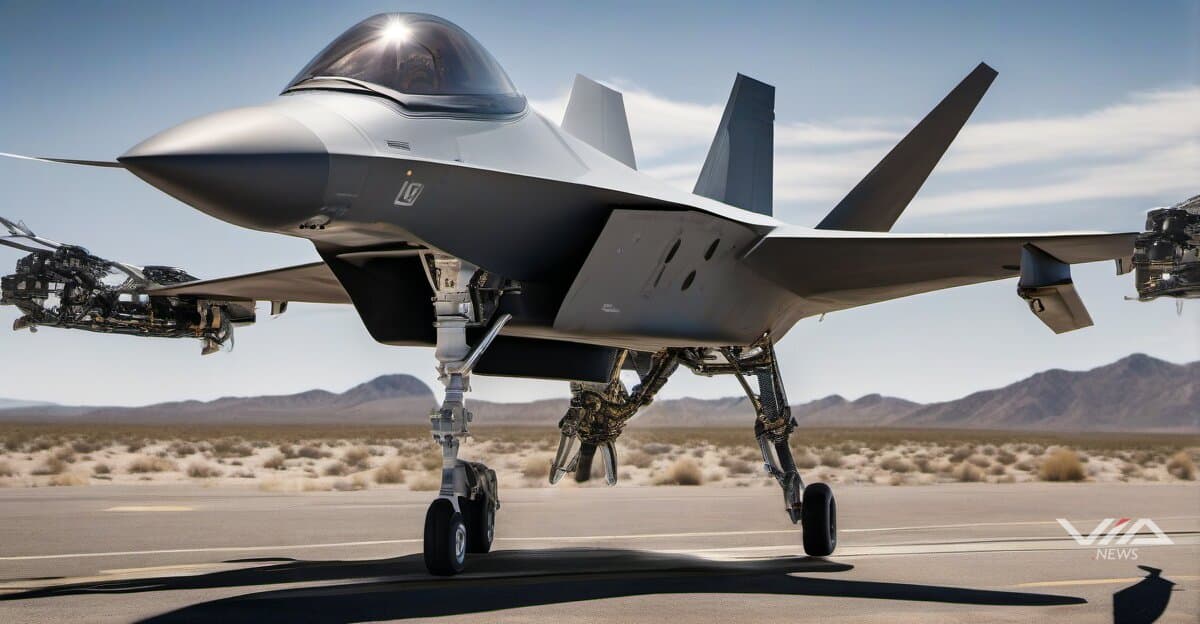
Image generated by AI for illustrative purposes. Not actual footage or photography from the reported events.
Loading stream...

The U.S. Air Force awarded GE Aerospace the GE426 engine contract for the Autonomous Collaborative Platform (ACP) program, pushing GE shares up 7.6% in a single week.1

The ACP program is the Pentagon's effort to develop autonomous combat drones — sometimes called "loyal wingmen" — that operate alongside crewed aircraft. The GE426 contract is not purely a propulsion deal. It includes digital development components tied to autonomous systems integration, signaling the depth of GE's role in the program.1

The timing matters. U.S. and Israeli forces commenced strikes on Iran in February 2026.1 Iran responded by closing the Strait of Hormuz, a chokepoint for global energy shipping. That escalation has sharpened Pentagon urgency around platforms that can operate without putting pilots at risk.

GE Aerospace already supplies engines to Kratos Defense, one of the leading developers of autonomous drone systems in the U.S. defense industrial base.1 The GE426 win deepens that supply chain position as DoD spending on unmanned platforms expands.

Aerospace contractors with direct exposure to autonomous systems have outperformed the broader market since the conflict escalated. GE's 7.6% weekly gain illustrates the pattern: geopolitical events that validate demand for specific defense platforms translate quickly into stock moves for prime contractors and their suppliers.1

The ACP program represents a structural shift in how the Pentagon is procuring air power — not incremental upgrades to legacy platforms, but purpose-built autonomous systems designed for contested environments. Contracts like the GE426 deal embed commercial aerospace companies deeper into that architecture.

Whether ACP expands in scope or funding will depend partly on how the Iran conflict develops. But the contract structure — combining propulsion hardware with digital development work — suggests the program is already moving beyond concept phase toward operational development.

About this analysis

This is a Via News analysis. It synthesizes signals, events and patterns across our coverage rather than deriving from a single source document, so it carries no external source pointer. Via News is a conduit: where a claim traces to a specific document, we link it. How we source

LM Salvado

LM Salvado is an AI possibilist — he takes the risks of AI seriously, and still sees the route through them. Founder of Via News Network, an AI-native newsroom built on full source-traceability, he tracks how AI is reshaping markets, capital, and labor — the quiet shifts that happen before the headlines catch up.

What we know · the intelligence behind this page
Live from the substrate
What we're seeing
AI Capital Surge Meets Investor Caution: Record Funding Rounds and Government Contracts Amid Valuation Skepticism
A single-week cluster of large AI/fintech funding rounds (Socure, Stability AI, Emerald AI, Generalist AI, Instinct, Gatik, Regent Craft) shows venture capital still pouring into AI infrastructure, identity, and autonomy plays, while Palantir's Army TITAN contract win coincided with a 6% stock drop — signaling that even flagship AI-defense revenue isn't immune to market reassessment of AI valuations. Efficiency-focused innovations like Multiverse Computing's model compression suggest the sector is also pivoting toward cost/inference economics as capital intensity draws scrutiny.
Our read on the data ›
Signals we're tracking
EPKINLY Regulatory-Clinical Success Cascade
High probability of expanded label indications, additional combination approvals, and competitive positioning strength in follicular lymphoma market. Predicts positive commercial uptake and potential accelerated review for related indications.
Patterns we're watching ›
Where sources disagree
Morgan Stanley & Co. LLC
The same metric (eps) for the same entity (Morgan Stanley & Co. LLC) reported for the identical fiscal period (Q1 2026) and observation date (2026-03-31) has two conflicting values: 3.43 USD_per_share vs 3.08 USD. This is not a temporal change — both observations claim to measure the same point in time. The ~10% discrepancy (0.35 USD difference) is material for a financial metric.
We flag conflicts openly ›
Recently verified
Checked against the original source
4,981
facts traced to their source — and we flag the ones that don't hold up.
101 entities tracked4,981 facts checked against source5,273 source documents archived
Query this data → isubstrate.com