
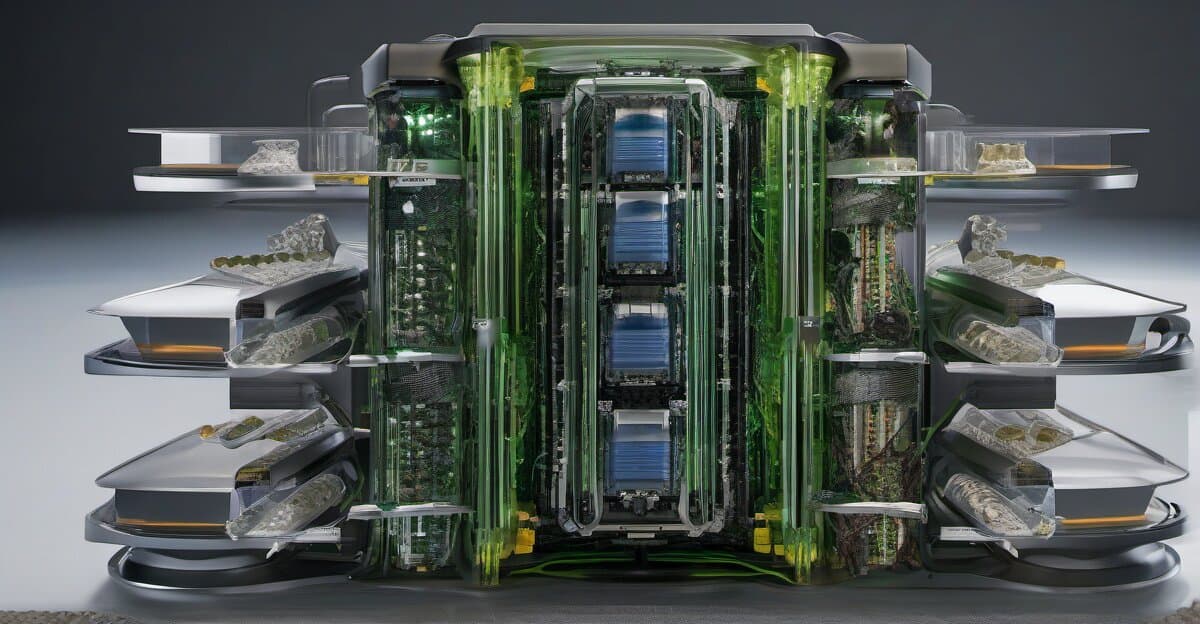
NVIDIA is moving aggressively to position its BioNeMo platform as the foundational infrastructure layer for pharmaceutical and biotechnology research — a calculated bet that the next decade of drug discovery will be built, quite literally, on its silicon and software.
The strategy is becoming clearer with each new partnership announcement. Eli Lilly, one of the world's largest pharmaceutical companies, and Thermo Fisher Scientific, a dominant force in laboratory instrumentation and life science services, have both aligned with BioNeMo as anchor partners. These are not peripheral technology experiments. They represent deep integrations of NVIDIA's biological foundation models and cloud-scale compute into core R&D workflows — protein structure prediction, molecular docking, generative chemistry, and increasingly, lab automation.
The Infrastructure Playbook, Applied to Biotech
Observers familiar with NVIDIA's enterprise AI expansion will recognize the pattern. The company established its GPU infrastructure as the de facto compute layer for large language model training, then layered software ecosystems — CUDA, NeMo, now BioNeMo — to create switching costs and ecosystem lock-in. The approach in biotech follows the same logic: get the most credible players to build on your platform early, and the rest of the market follows.
BioNeMo provides pre-trained biological foundation models covering protein language modeling, molecular generation, and multi-omics analysis. These models are computationally expensive to train and scientifically complex to validate — precisely the kind of capability that most biotech firms lack the resources to develop independently. By offering them as platform services, NVIDIA effectively becomes a critical dependency in the drug discovery stack.
A Constellation of Biotech AI Startups
Beyond the marquee names, a growing constellation of specialized biotech AI startups is building on BioNeMo infrastructure. These companies — working across areas from generative antibody design to AI-driven clinical trial optimization — benefit from access to validated biological models and scalable GPU compute without bearing the full capital cost of building from scratch. For NVIDIA, each startup represents both a revenue stream and a network effect that makes the platform more valuable to larger enterprise customers.
The convergence of laboratory automation with AI is a particularly significant signal. Thermo Fisher's involvement specifically points toward the integration of BioNeMo capabilities with physical lab systems — robotic liquid handling, high-throughput screening, automated synthesis — creating closed-loop pipelines where AI models design experiments and automated labs execute them with minimal human intervention.
Structural Implications for Drug Development Economics
The downstream implications for how drugs are developed and financed are substantial. If foundation models and compute infrastructure become commoditized through platform access, the marginal cost of running early-stage discovery experiments drops significantly. This could compress the early phases of drug development timelines and shift competitive advantage toward organizations that best orchestrate AI-driven pipelines rather than those with the largest traditional R&D headcounts.
It also raises concentration risk. As with cloud computing, a world where a single platform underpins a large share of global drug discovery creates systemic dependencies that regulators and enterprise risk officers are only beginning to evaluate.
For now, the momentum is clearly with NVIDIA. With confidence in the BioNeMo narrative building and sentiment improving across the biotech AI sector, the company appears to be executing its vertical capture strategy ahead of competitors. The question is no longer whether AI will transform drug discovery — it is who controls the infrastructure when it does.