
Sunday, September 6, 2026

Stellar Trading Systems connects algorithmic trading infrastructure to seven commodity exchanges including Abaxx

Stellar Trading Systems completed connectivity integration with Abaxx Exchange on November 30, 2025, extending its automated trading products to seven major commodity exchanges. The infrastructure provider's Quantum Server, MarketMaker, and spreadMachine now support algorithmic trading across Thailand Futures Exchange, Dubai Gold and Commodities Exchange, Multi Commodity Exchange of India, Comex, Shanghai Futures Exchange, and Tokyo Commodity Exchange.

Stellar Trading Systems connects algorithmic trading infrastructure to seven commodity exchanges including Abaxx
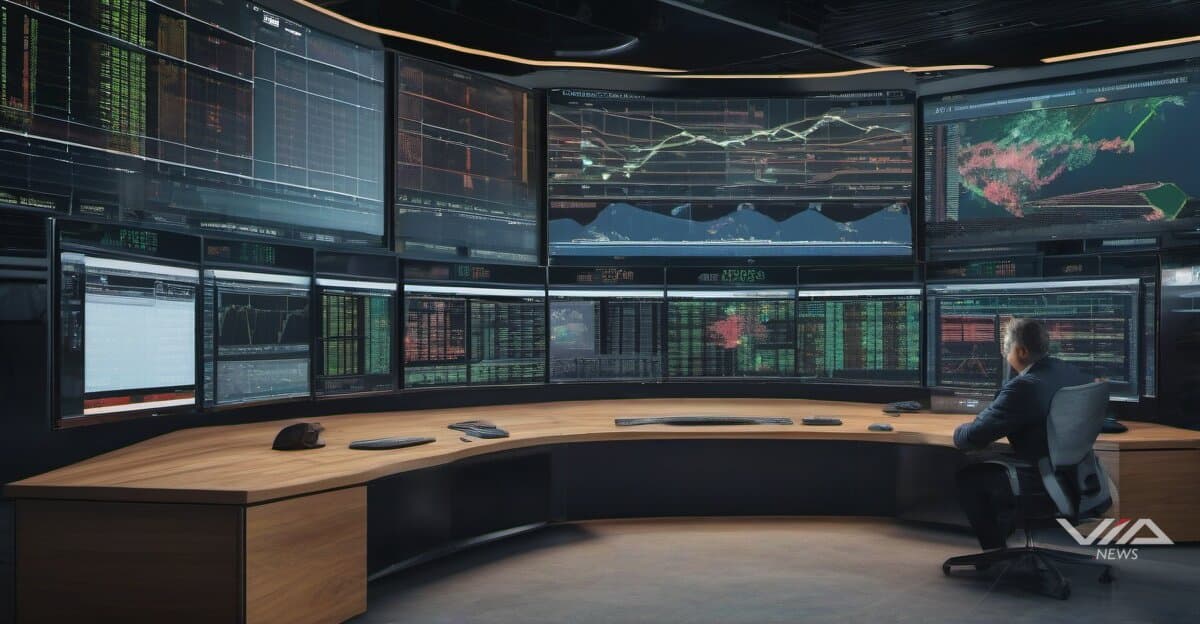
Image generated by AI for illustrative purposes. Not actual footage or photography from the reported events.
Loading stream...

Stellar Trading Systems completed connectivity integration with Abaxx Exchange on November 30, 2025, adding a seventh commodity exchange to its algorithmic trading infrastructure network. The integration brings Stellar's automated trading products—Quantum Server, MarketMaker, spreadMachine, and Server API—to Abaxx's commodity platform.

Stellar now maintains direct connections to Thailand Futures Exchange, Dubai Gold and Commodities Exchange, Multi Commodity Exchange of India, Comex, Shanghai Futures Exchange, and Tokyo Commodity Exchange. Each integration enables automated execution of futures contracts through Stellar's infrastructure stack.

Abaxx Exchange launched USD-denominated gold futures contracts backed by Singapore-based Abaxx Spot. The exchange targets institutional traders seeking algorithmic execution capabilities in precious metals markets. Stellar's MarketMaker product provides automated liquidity provision, while spreadMachine executes inter-commodity spread strategies.

The connectivity pattern suggests infrastructure providers are positioning for increased algorithmic activity in commodity futures. Traditional commodity trading relied on manual execution, but exchange connectivity integrations indicate a shift toward automated systems. Trading volume data following these integrations would reveal whether algorithmic infrastructure drives measurable adoption.

LuniCapital, another trading infrastructure provider, highlighted "platform architecture designed to support real-time interaction with cryptocurrency markets" and "performance-led platform development as cryptocurrency markets evolve." This signals parallel infrastructure buildout across digital and traditional commodity markets.

Stellar's Server API allows third-party developers to build custom trading algorithms on top of exchange connectivity. This creates a development ecosystem around commodity futures automation. The API approach differs from closed proprietary systems, potentially accelerating algorithm deployment across connected exchanges.

The seven-exchange network gives algorithmic traders unified infrastructure access across Asian, Middle Eastern, and North American commodity markets. Cross-market arbitrage strategies become executable through a single infrastructure layer. Quantum Server handles order routing and execution management across the connected venues.

Trading infrastructure connectivity serves as a leading indicator for algorithmic adoption. Exchanges that integrate with providers like Stellar typically see increased automated trading activity within months. Monitoring volume patterns on Abaxx and other newly connected exchanges would test this correlation.

What we know · the intelligence behind this page
Live from the substrate
What we're seeing
AI Capital Surge Meets Investor Caution: Record Funding Rounds and Government Contracts Amid Valuation Skepticism
A single-week cluster of large AI/fintech funding rounds (Socure, Stability AI, Emerald AI, Generalist AI, Instinct, Gatik, Regent Craft) shows venture capital still pouring into AI infrastructure, identity, and autonomy plays, while Palantir's Army TITAN contract win coincided with a 6% stock drop — signaling that even flagship AI-defense revenue isn't immune to market reassessment of AI valuations. Efficiency-focused innovations like Multiverse Computing's model compression suggest the sector is also pivoting toward cost/inference economics as capital intensity draws scrutiny.
Our read on the data ›
Signals we're tracking
EPKINLY Regulatory-Clinical Success Cascade
High probability of expanded label indications, additional combination approvals, and competitive positioning strength in follicular lymphoma market. Predicts positive commercial uptake and potential accelerated review for related indications.
Patterns we're watching ›
Where sources disagree
Morgan Stanley & Co. LLC
The same metric (eps) for the same entity (Morgan Stanley & Co. LLC) reported for the identical fiscal period (Q1 2026) and observation date (2026-03-31) has two conflicting values: 3.43 USD_per_share vs 3.08 USD. This is not a temporal change — both observations claim to measure the same point in time. The ~10% discrepancy (0.35 USD difference) is material for a financial metric.
We flag conflicts openly ›
Recently verified
Checked against the original source
4,981
facts traced to their source — and we flag the ones that don't hold up.
101 entities tracked4,981 facts checked against source5,273 source documents archived
Query this data → isubstrate.com