
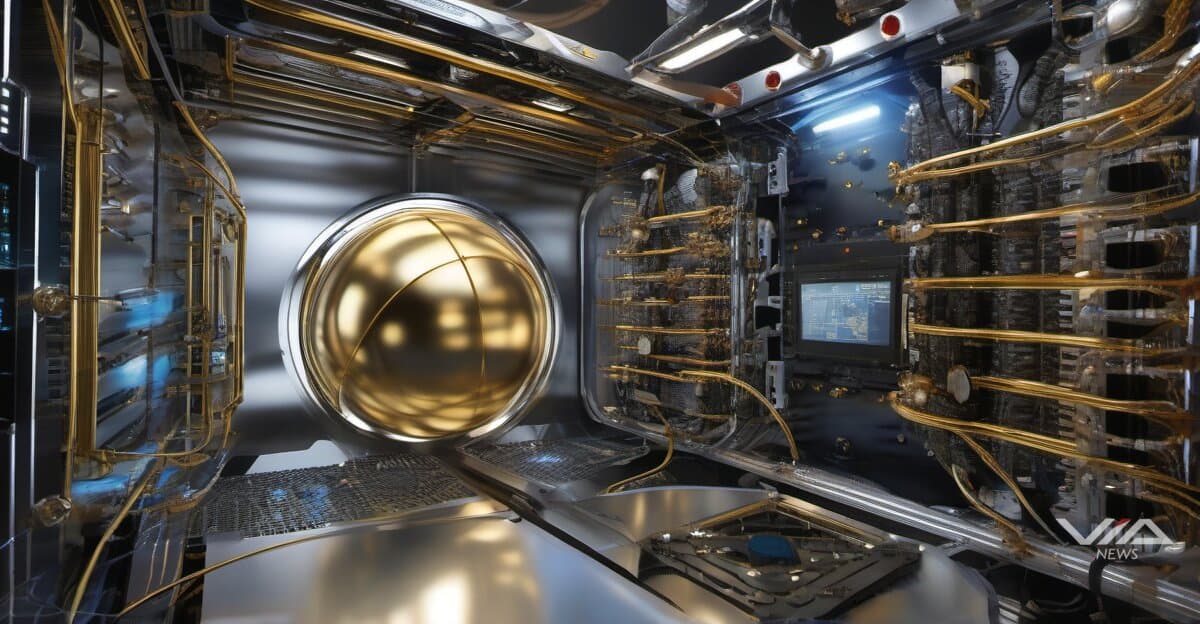
Quantum computing hardware development splits across five competing architectures, none dominant for AI system integration. Superconducting qubits (IBM, Google), ion traps (IonQ, Quantinuum), photonic systems (Xanadu, PsiQuantum), topological qubits (Microsoft), and neutral atoms (QuEra, Pasqal) each promise quantum advantage but suit different computational tasks.
South Korean manufacturer SDT Inc. exemplifies the capital allocation dilemma. Quantum design firms must either specialize in one architecture—risking obsolescence if that approach fails—or spread resources across multiple platforms, diluting expertise and delaying time-to-market.
AI workload requirements complicate architectural choices. Machine learning optimization favors gate-based quantum computers with high qubit connectivity. Neural network training might benefit from photonic systems' room-temperature operation and lower error rates. Quantum sampling for generative AI could leverage neutral atom arrays' scalability to 1,000+ qubits.
Superconducting systems lead in qubit count (IBM's 1,121-qubit Condor) but require dilution refrigeration to 15 millikelvin. Ion traps offer superior coherence times—minutes versus microseconds—but scale slowly. Photonic approaches operate at room temperature, cutting infrastructure costs 90%, yet lack proven error correction at scale.
Hybrid quantum-classical architectures emerge as the practical path for AI integration. These systems offload specific subroutines—optimization, sampling, linear algebra—to quantum processors while classical GPUs handle data preprocessing and model inference. No pure quantum system will replace AI accelerators; the question is which quantum approach becomes the standard co-processor.
Investment risk intensifies as manufacturing scales. Fabrication facilities for superconducting qubits cost $50M+. Photonic systems leverage existing semiconductor fabs but require new packaging. Ion trap systems need precision lasers and vacuum chambers. Committing to the wrong platform strands both capital and specialized engineering talent.
Industry forecasts expect architectural consolidation by 2028-2030, once error-corrected logical qubits demonstrate clear application advantages. Until then, quantum hardware manufacturers face a pre-paradigmatic landscape where today's $100M R&D investment could become tomorrow's technical debt. For AI applications specifically, the architecture supporting efficient tensor operations with 100+ logical qubits will likely capture majority market share.