
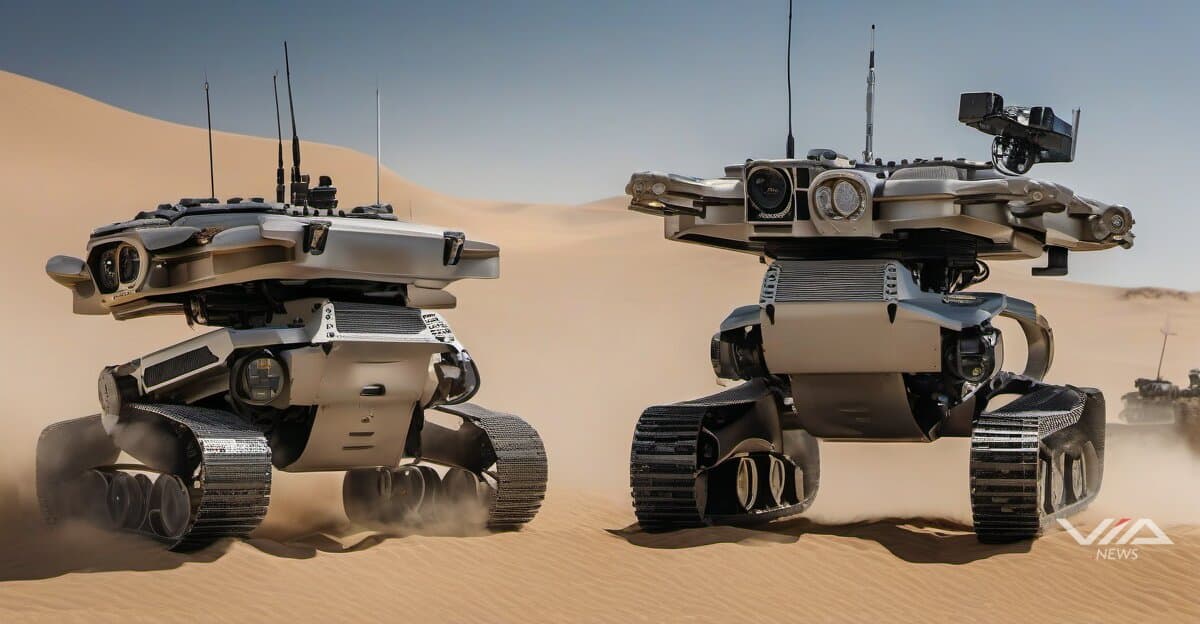
The robotics sector is experiencing simultaneous expansion across military and commercial applications, driven by defense contracts and autonomous delivery adoption. Ondas secured a $15.8M contract for demining robots while Anduril acquired ExoAnalytic to expand space surveillance capabilities.
Serve Robotics raised its 2026 guidance as last-mile delivery robots gain traction in urban environments. The company's acquisition of Vayu brings physical AI foundation models into its platform, signaling a shift toward more adaptable autonomous systems that can handle varied delivery scenarios.
This dual-track growth is creating industry tensions over military AI applications. OpenAI's robotics division leader recently resigned, highlighting internal conflicts about defense partnerships. Anthropic's designation by the Pentagon as a strategic AI partner has intensified debates about commercial AI firms' role in military technology.
The security and guarding services industry represents a $50B market opportunity. AI Technology Solutions unveiled RADSight 2.0, a visual deterrent system that cuts power consumption by over 50% compared to previous versions. The company claims its autonomous security solutions deliver 35-80% cost savings versus traditional manned security.
RAD expects to convert sales opportunities into recurring revenue as Fortune 500 clients deploy units, with potential for multiple reorders. The shift from capital expenditure to recurring revenue models is reshaping robotics business structures across both defense and commercial sectors.
The bifurcation between military and civilian applications is becoming more pronounced. Defense contracts are accelerating technological development cycles, while civilian robotics companies are emphasizing the ethical separation of their technologies from military use. This tension is expected to intensify as AI capabilities advance and defense budgets increase.
The ethics debate centers on whether commercial AI companies should participate in military applications. Some argue defense partnerships compromise AI safety principles, while others contend that withdrawing from defense work cedes influence over how military AI systems are developed and deployed.