
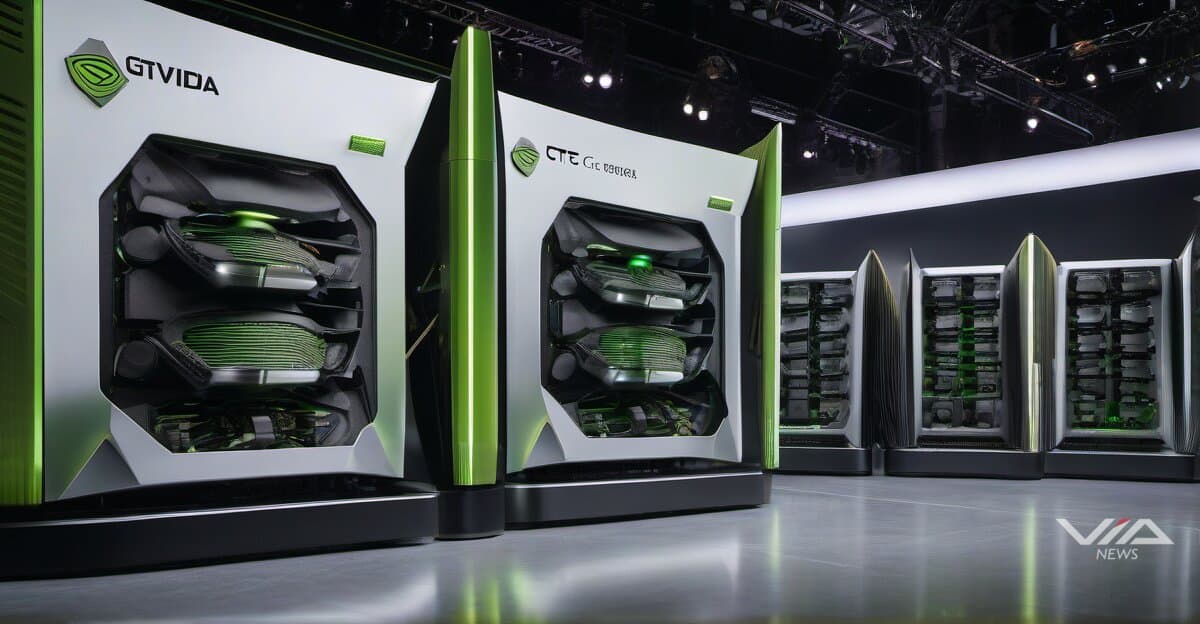
NVIDIA announced over 80 strategic partnerships at GTC 2026 on March 16, positioning itself as the central orchestrator of AI infrastructure. The partnerships span cloud providers, industrial software giants, robotics companies, and inference providers.
The company unveiled Vera Rubin servers and Grace Blackwell hardware alongside the GR00T N2 robotics foundation model. An Agent Toolkit for developers rounds out what NVIDIA frames as a comprehensive AI infrastructure stack.
This marks a strategic shift from hardware sales to platform provider. Where NVIDIA previously sold GPUs to companies building AI systems, it now offers the full stack: compute hardware, foundation models, and developer tools.
The robotics push centers on physical AI. GR00T N2 represents NVIDIA's attempt to provide pre-trained models for robots, similar to how language models serve chatbots. Companies can customize these models rather than training from scratch.
The 80+ partnerships create dependencies across the AI ecosystem. Cloud providers run NVIDIA hardware. Software companies integrate NVIDIA tools. Robotics firms deploy NVIDIA models. Each partnership embeds NVIDIA deeper into production AI workflows.
The timing coincides with growing enterprise AI deployment. Companies moving from experimentation to production need integrated solutions. NVIDIA positions itself as the one-stop provider: hardware for training, models for starting points, and tools for deployment.
The Agent Toolkit targets developers building AI applications. It packages common components for agent-based systems, reducing development time. This follows the platform playbook: make it easy to build on NVIDIA's stack, and developers lock into the ecosystem.
The robotics foundation models face competition from companies like XPeng, which released its VLA 2.0 system for autonomous vehicles. Tesla continues developing its humanoid robots. The question is whether NVIDIA's general-purpose models can match specialized systems built for specific robotics tasks.
The GTC announcements show NVIDIA betting that control of the full AI stack—from silicon to software—creates more value than hardware alone. The 80+ partnerships suggest other companies agree, at least for now.