
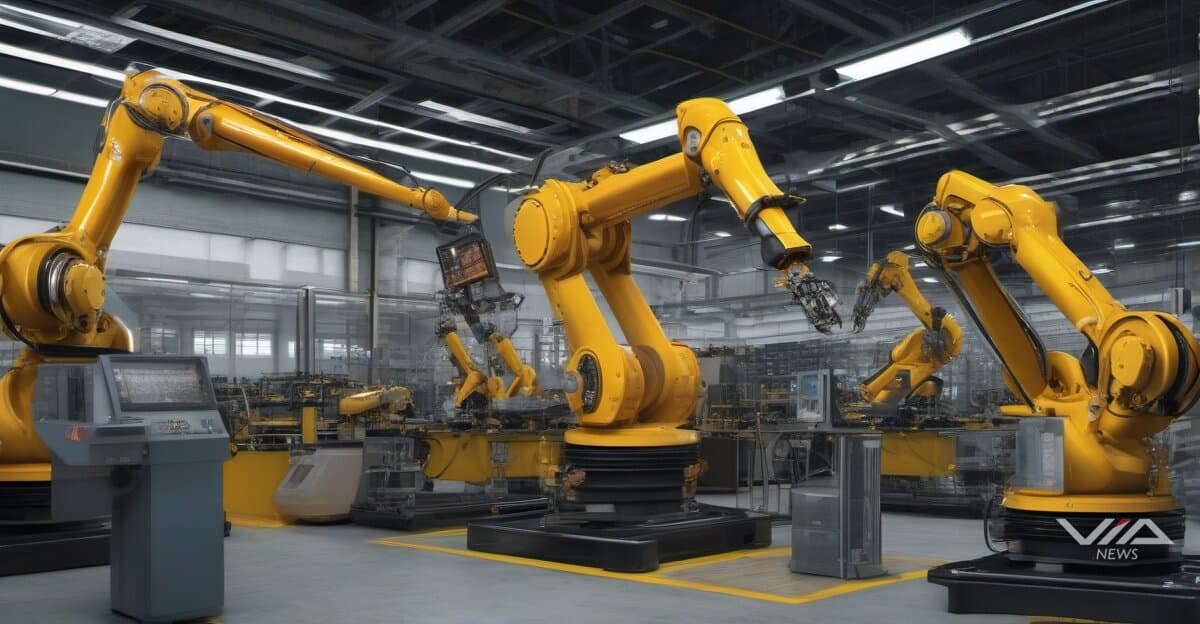
The International Federation of Robotics documented a significant rise in industrial automation robot sales, driven by persistent labor shortages across manufacturing sectors. Companies are deploying robots not just for repetitive tasks but for AI-enhanced operations requiring edge computing capabilities.
CoreWeave's capital expenditure trajectory illustrates the infrastructure demands. The company projects spending increases from $15.4 billion in 2025 to at least $30 billion in 2026, reflecting data center buildouts that support AI-powered automation systems.
AMD is positioning processors for this shift. Its Ryzen AI 400 Series chips are the first designed to power Copilot+ experiences, targeting industrial applications. Jack Huynh, AMD executive, stated the desktop PC is evolving from tool to intelligent assistant—a transition mirrored in factory floor computing.
Marvell Technology's Q3 results support the trend. The company reported net revenue of $2.08 billion, suggesting strong demand for data infrastructure components that enable robotics connectivity and real-time processing.
The automation wave creates cascading hardware demands. Traditional industrial robots operated on fixed programs and simple controllers. AI-enabled systems require edge processors for machine vision, predictive maintenance algorithms, and adaptive workflow management. These capabilities need specialized compute hardware installed at manufacturing sites rather than relying solely on cloud connections.
Labor constraints are the primary catalyst. Manufacturing sectors report unfilled positions despite wage increases, pushing automation ROI calculations into favorable territory. Robots that once required 3-5 years to justify now pay back investments faster as human labor costs rise and availability shrinks.
The market is splitting between traditional automation vendors and AI-first robotics companies. Established players are retrofitting existing robot lines with vision systems and learning capabilities. Startups are building robots with AI integration from initial design, requiring different processor architectures and edge computing approaches.
Downstream effects extend beyond robot manufacturers. Edge AI processor makers, industrial networking equipment suppliers, and specialized sensor manufacturers are expanding production capacity. The hypothesis suggests monitoring robot shipment volumes alongside edge AI processor sales will reveal adoption patterns and infrastructure requirements for the next automation phase.