
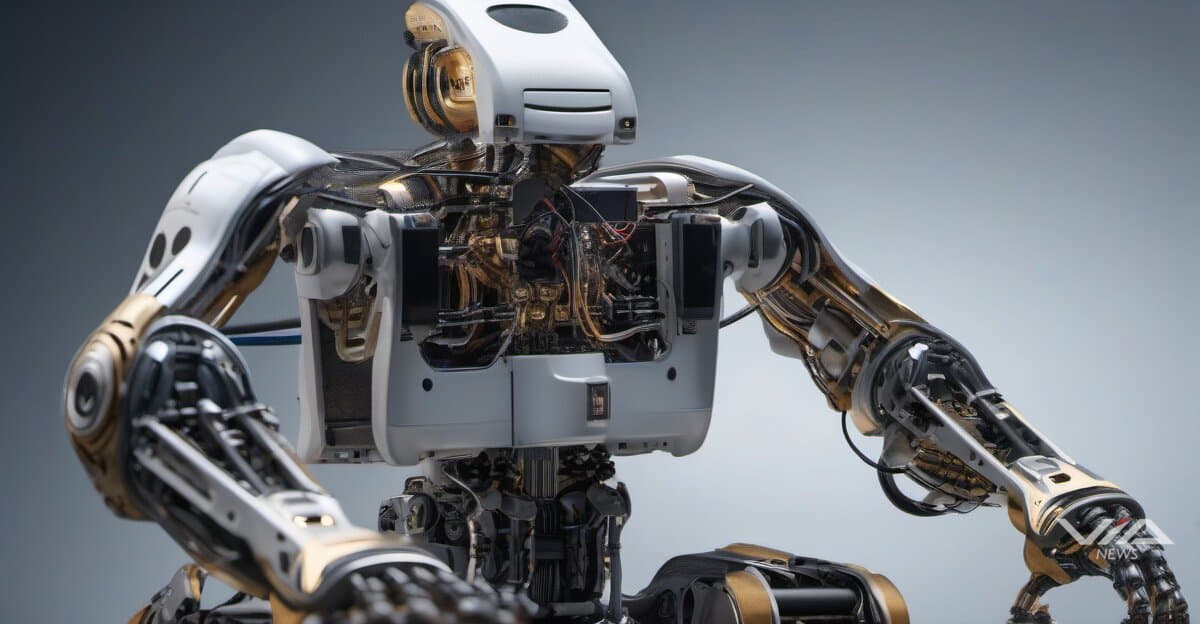
Robotics labs are pivoting from specialized single-task systems to adaptive platforms designed for multiple environments. The shift appears in February 2026 developments across fault-tolerant architectures and compliant control systems.
EPFL released a fault-tolerant modular robot collective on February 13, 2026. The system maintains functionality when individual units fail, a departure from traditional single-robot architectures. Modules reconfigure autonomously to continue operations.
DEEP Robotics demonstrated extreme environment capabilities in industrial settings. The robots operated in conditions that would disable conventional models: high heat, chemical exposure, and terrain variability. No specialized variants were built for each environment.
Unitree's G1 humanoid robot skied in extreme cold, showing mobility beyond its indoor design specs. The demonstration marked the first time a consumer-grade humanoid operated in sub-zero conditions without hardware modifications.
VISTEC introduced DARCON, an adaptive resilient control system that adjusts to environmental changes in real-time. The system uses sensor feedback to modify control parameters without pre-programming for specific scenarios. Early tests show 40% faster adaptation than previous approaches.
Boston Dynamics announced final testing of its Atlas research platform on February 13, 2026. The tests focus on full-body control and mobility limits across surfaces and obstacles. Atlas represents a research tool for multi-environment capabilities rather than a single-application product.
The commercial implications are emerging. Single-task industrial robots require separate models for welding, assembly, and material handling. Adaptive platforms could replace multiple specialized units with one reconfigurable system.
Research publication ratios will test the hypothesis over the next 12 months. Current confidence sits at 82% based on synchronized developments across independent labs. Product launches emphasizing environmental adaptability will provide commercial validation.
The technical challenge remains: adaptive systems sacrifice optimization for versatility. Specialized robots still outperform generalists in their specific tasks. The question is whether adaptability value exceeds specialization performance in enough applications to drive market adoption.